
NEWS
Professional attitude and strict quality control
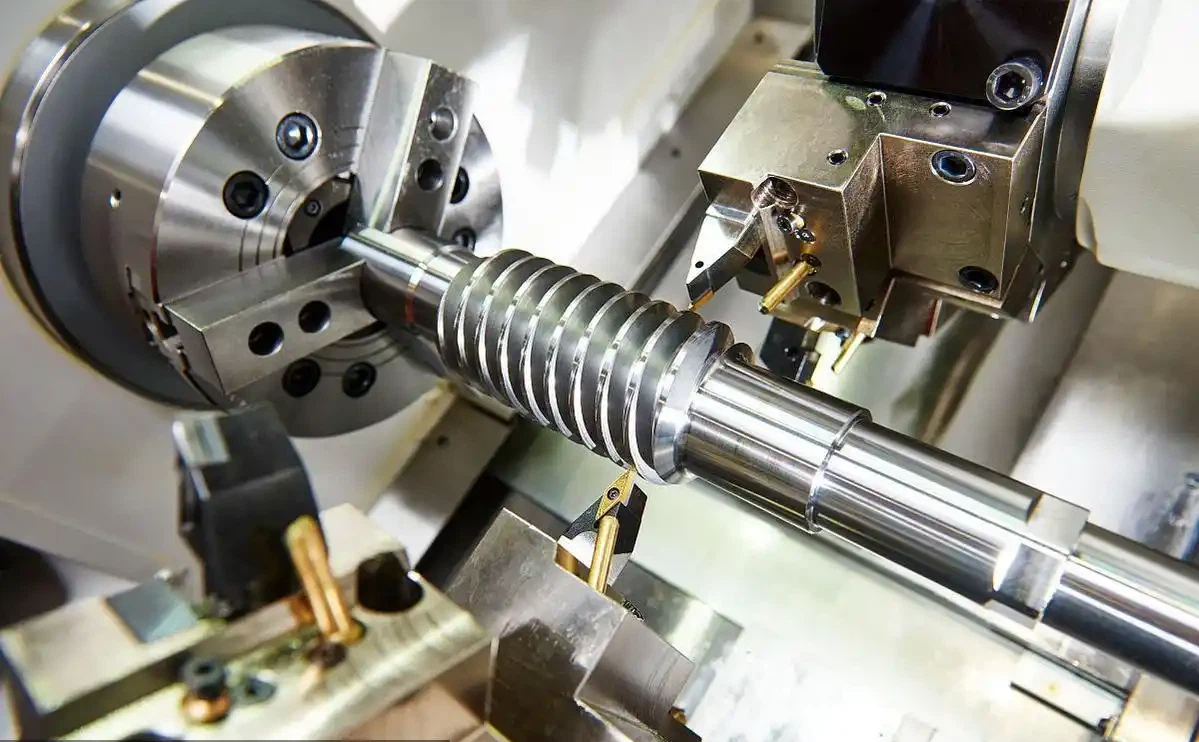
What is Metalworking? Broadly speaking, any process that alters the form or properties of raw metal materials falls under the category of metalworking. Everyday metal products, from small screws to large mechanical equipment, undergo various processing steps. These steps not only give the metal the desired shape but also improve its mechanical properties and durability.
Metalworking is mainly divided into several categories:
1. Forming Processing
Forming processing refers to the process of changing the shape of metal without breaking it. Common forming methods include forging, stamping, and bending. Forging is a method of plastically deforming metal through hammering or pressure, which can improve the internal structure of the metal and enhance its mechanical properties. Stamping uses dies to apply pressure to thin sheet metal, causing it to separate or undergo plastic deformation. Bending processes use specific equipment to bend sheet metal into the required angle.
2. Machining Processing
Machining processing is the process of obtaining precise dimensions and shapes by removing excess material. Turning, milling, and drilling are three basic cutting methods. In turning, the workpiece rotates while the cutting tool moves linearly; in milling, the opposite occurs, with the cutting tool rotating and the workpiece moving. Drilling is the process of machining round holes in metal using a rotating drill bit. These machining methods can achieve extremely high dimensional accuracy and surface quality.
3. Joining Processes
Metal joining processes include welding, riveting, and threaded connections. Welding uses heat or pressure to professionally connect metal parts; riveting uses rivets to mechanically connect parts; threaded connections utilize standard parts such as bolts and nuts to achieve detachable connections. Each method has its applicable scenarios and characteristics.
4. Heat Treatment
Heat treatment is a process that modifies the microstructure of metals by controlling the heating and cooling processes, thereby adjusting their properties. Common heat treatment methods include annealing, quenching, and tempering. Annealing can reduce hardness and improve machinability; quenching can increase hardness and strength; tempering is used to eliminate quenching stress and improve toughness.
What problems are commonly encountered in metal processing? How to solve them?
Problem 1: How to ensure accuracy during processing?
Accuracy control requires comprehensive consideration of equipment, cutting tools, and process parameters. Choosing appropriate machining equipment is fundamental; precision CNC machine tools can achieve higher machining accuracy. The selection and wear condition of cutting tools directly affect machining quality. Reasonable cutting parameters, including spindle speed, feed rate, and depth of cut, are key factors in ensuring accuracy. Ambient temperature changes and vibrations also affect machining accuracy and need to be considered in process design.
Question 2: What are the differences in machining characteristics among different metal materials?
Different metal materials exhibit significant differences in machining performance. Steel has good overall mechanical properties, but high-strength steel is difficult to machine. Aluminum alloys are lightweight and easy to machine, but are relatively soft and prone to tool sticking. Stainless steel has good corrosion resistance, but poor thermal conductivity, and is prone to hardening during machining. Copper alloys have good electrical conductivity, but high plasticity, making chip breaking difficult. Understanding material properties is crucial for selecting appropriate machining methods.
Question 3: How to control machining costs?
Cost control requires a multi-pronged approach. Material selection should balance performance requirements and economy, avoiding the overuse of high-performance materials. Process routes need optimization to reduce unnecessary machining steps. Improving material utilization and rationally planning material cutting schemes can reduce scrap generation. Proper tool management and equipment maintenance can also effectively reduce production costs.
Question 4: What are the surface treatment options?
Surface treatments can improve both appearance and performance. Electroplating increases corrosion resistance and aesthetics; spraying forms a protective layer and offers a variety of color options; anodizing, mainly used for aluminum, forms a hard and wear-resistant surface layer; blackening uses chemical methods to create a protective oxide film on steel surfaces. When choosing a surface treatment method, the operating environment, performance requirements, and cost factors must be considered comprehensively.
What factors should be considered when choosing metal processing services?
Processing capacity is a core consideration. This includes equipment type, processing range, and precision level. Different scales of processing tasks require matching appropriate equipment resources. The experience and professionalism of the technical team directly affect processing quality.
A quality assurance system is crucial. A sound quality control process ensures that products meet specifications. From raw material inspection upon arrival to production process control and final product testing, each step requires strict adherence to standards.
Furthermore, on-time delivery capability is also essential. Stable production planning and efficient process management ensure on-time delivery. This requires companies to possess strong production organization and supply chain management capabilities.
The metal processing industry is undergoing technological innovation. Digital technologies are increasingly widely applied, and the concept of smart manufacturing is gradually taking root. Automated equipment improves production efficiency and reduces labor costs. The emergence of new materials drives advancements in processing technology, and composite processing technologies are being used more extensively. The concept of green manufacturing is also gaining popularity, with energy conservation and environmental protection becoming the industry's development direction.
The value of metal processing services is reflected in multiple aspects. It helps clients transform design concepts into actual products, supporting the realization of various innovative projects. Through professional processing services, clients can save on equipment investment and technology R&D costs, allowing them to focus on their core business. Professional metal processing services can provide high-quality products that meet standards and satisfy the needs of different application scenarios.
When choosing metal processing services, clients are advised to clearly define their needs and provide detailed technical requirements. Thorough communication with the processing service provider regarding design intent and intended use helps in developing the most suitable processing solution. Understanding basic processing technology knowledge allows for a better assessment of the service provider's professional level.
As a fundamental link in manufacturing, metal processing continues to support various industries. From everyday consumer goods to specialized equipment, the quality of metal products largely depends on the level of processing technology. As technology advances and market demands change, metal processing services will continue to evolve, creating more value for customers.
Search
Categories List
Need More Details?
Contact me for details on creating and managing design projects, project features, and services and prices
Send Message
Please fill the form correctly to send us your requirement. We respond to all enquiries within 4 business hours.