
NEWS
Professional attitude and strict quality control
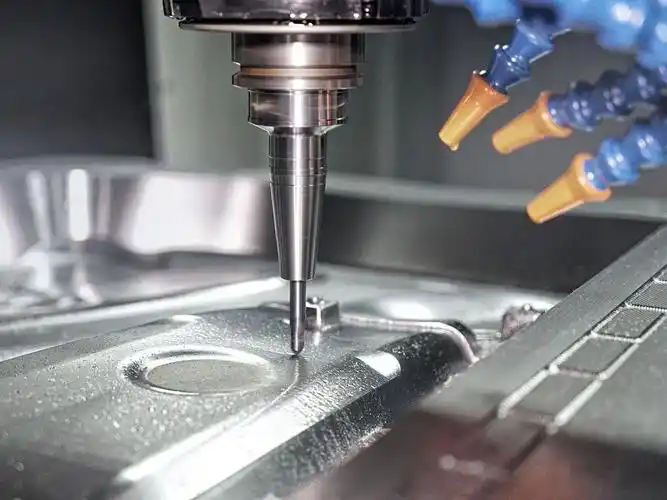
Metalworking is the process of shaping metal materials into desired shapes and sizes. It has accompanied the development of human civilization, evolving from ancient bronzes to modern precision parts, becoming an indispensable part of industrial production. Metalworking involves not only cutting, forming, and joining metals, but also heat treatment and surface treatment to ensure the final product possesses the required performance and appearance.
Metalworking can be divided into several main categories. The first is forming, which changes the shape of metal by applying external force without removing material. The second is cutting, which removes excess metal using tools to achieve precise dimensions. The third is joining, which assembles multiple metal parts together. The fourth is heat treatment, which alters the internal structure of metal by controlling heating and cooling processes, thereby adjusting its properties. The fifth is surface treatment, used to improve the corrosion resistance, aesthetics, or special functions of metals.
Common problems in metalworking include how to select appropriate processing methods, how to control processing accuracy, and how to ensure that the properties of the processed metal meet requirements. These problems can be solved through a thorough understanding of the properties of metals, processing equipment, and process parameters. For example, machining may be more suitable for high-precision parts, while forming may be more economical and efficient for mass production.
Metalworking involves a wide variety of materials, including steel, aluminum, copper, and titanium. Different metals have different physical and chemical properties, thus requiring specific process selection. For example, aluminum has a low melting point and is easy to form, but it is prone to oxidation and requires protective measures during processing; steel has high strength but a significant tendency for work hardening, which may require intermediate annealing to restore its plasticity.
The selection of tools and equipment is crucial in metalworking. Common machining equipment includes lathes, milling machines, drilling machines, and stamping presses. These machines achieve metal processing through different motion mechanisms and tool designs. For example, lathes are mainly used for machining rotationally symmetrical parts, while milling machines are suitable for cutting complex shapes. The material of the tools is also important; high-speed steel and cemented carbide are commonly used tool materials, as they maintain cutting performance under high temperature and pressure.
Precision control is a critical issue in metalworking. How can the accuracy of machining dimensions be guaranteed? This involves machine tool rigidity, tool wear, and process parameter settings. Using CNC technology, machining paths and speeds can be programmed and controlled, significantly improving accuracy and repeatability. Online measurement and feedback systems can adjust the machining process in real time, reducing errors.
Another common problem is the thermal effect during machining. Metal generates heat during cutting or forming, which can lead to deformation or changes in properties. How to reduce the thermal effect? This can be mitigated by optimizing cutting parameters, using coolant, or selecting an appropriate machining sequence. For example, in cutting, reducing the feed rate or increasing the coolant flow rate can effectively control temperature rise.
The surface quality of machined metal is also an important consideration. Surface roughness, scratches, or residual stress can affect the performance of parts. How to improve surface quality? This can be achieved through finishing processes such as grinding, polishing, or sandblasting. Surface treatment techniques such as electroplating, spraying, or anodizing can provide additional protection or decorative effects.
In metal joining, welding and riveting are common methods. Welding melts and joins metal through localized heating, suitable for specialized connections; riveting uses mechanical fixing, facilitating disassembly. How to choose the joining method? This depends on material compatibility, load requirements, and cost factors. For example, welding may be difficult for joining dissimilar metals, while riveting or bonding may be more suitable.
Heat treatment plays a crucial role in metal processing. By heating, holding, and cooling, the hardness, toughness, or wear resistance of metals can be adjusted. Common heat treatment processes include annealing, quenching, and tempering. For example, annealing softens metals, facilitating subsequent machining; quenching increases hardness but can cause brittleness, so it is often combined with tempering to balance properties.
Cost control in metal processing is another practical issue. How can processing costs be reduced without sacrificing quality? This can be achieved by optimizing material utilization, improving processing efficiency, or reducing scrap rates. For example, using forming processes instead of cutting processes can reduce material waste; using automated equipment can reduce labor costs.
Safety is always a top priority in the metal processing field. Processing may involve high temperatures, high pressures, or sharp tools. How can operational safety be ensured? This requires strict adherence to operating procedures, the use of protective equipment, and regular machine maintenance. For example, in machining, wearing safety goggles and gloves can prevent injuries from flying debris; in heat treatment areas, isolation zones are set up to prevent burns.
Metalworking technologies are constantly evolving, with new processes and materials emerging continuously. For example, additive manufacturing, or 3D printing, allows the creation of complex parts by layering metal powder, complementing traditional subtractive machining. This technology is particularly suitable for prototyping or small-batch production, enabling rapid design iteration.
Environmental factors are also increasingly important in metalworking. Waste, exhaust gases, and wastewater generated during processing need proper treatment. How can green processing be achieved? This can be driven by recycling metal scraps, using environmentally friendly coolants, or optimizing energy consumption. For example, many companies adopt closed-loop water recycling systems to reduce water waste.
Metalworking has an extremely wide range of applications, from everyday items such as kitchenware and tools, to industrial equipment such as engines and machine tools, and to high-tech fields such as aerospace and electronics. Different applications have varying requirements for machining accuracy and performance, thus necessitating customized process solutions.
Metalworking is a highly comprehensive and widely applicable skill. It integrates materials science, mechanical engineering, and practical experience, providing reliable metal products for various industries through continuous optimization and innovation. For practitioners and enthusiasts alike, understanding the basic principles and common problems of metal processing helps in better selecting methods and solving problems, thus driving the technology to a higher level.
Search
Categories List
Need More Details?
Contact me for details on creating and managing design projects, project features, and services and prices
Send Message
Please fill the form correctly to send us your requirement. We respond to all enquiries within 4 business hours.