
NEWS
Professional attitude and strict quality control
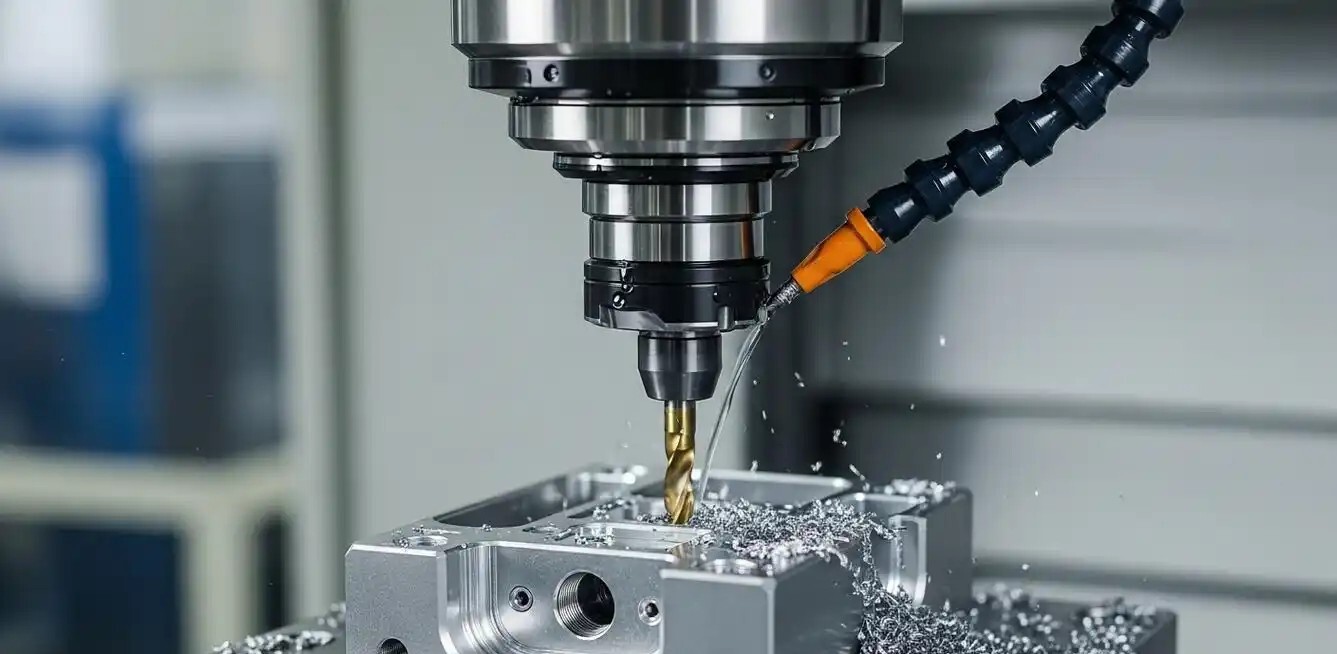
With the rapid development of modern manufacturing, precision CNC machining technology has occupied an important position in the field of metal parts manufacturing.
Precision CNC machining, with its high precision, high efficiency, and high flexibility, has become an indispensable processing method in industries such as aerospace, automotive manufacturing, medical devices, and electronic equipment.
This article will elaborate on the basic principles, process flow, technical advantages, and application areas of precision CNC machining.
I. Basic Principles of Precision CNC Machining
CNC machining is an automated machining technology controlled by a computer. Its core is to use a numerical control system to precisely control the machine tool to achieve the machining of complex-shaped metal parts. The basic principles of precision CNC machining include the following steps:
1. Design Drawings and Programming: First, based on the product design drawings, a 3D model is created using CAD (Computer-Aided Design) software. Then, the 3D model is converted into a numerical control program (G-code) using CAM (Computer-Aided Manufacturing) software, guiding the machine tool's motion trajectory and machining parameters.
2. Machine Tool Setup: Before machining, appropriate cutting tools, fixtures, and machining parameters need to be selected based on the workpiece's material, shape, and size. The choice of cutting tools directly affects machining accuracy and efficiency, while the stability of the fixture ensures that the workpiece will not shift or vibrate during machining.
3. Machining Process: The CNC machine tool automatically executes cutting, drilling, milling, turning, and other operations according to a preset program. The CNC system monitors the machining status in real time through servo motors and sensors to ensure that each operation is accurate.
4. Quality Inspection: After machining, a coordinate measuring machine (CMM) or other inspection equipment is used to inspect the dimensions and shape of the workpiece to ensure that it meets the design requirements.
II. Precision CNC Machining Process Flow
The precision CNC machining process flow typically includes the following steps:
1. Material Selection: Based on the workpiece's operating environment and performance requirements, a suitable metal material is selected, such as aluminum alloy, stainless steel, titanium alloy, copper alloy, etc. Different materials have different machining properties and cutting parameters, which need to be adjusted according to the actual situation.
2. Rough Machining: Before precision machining, rough machining is usually required to remove excess material and initially form the workpiece's outline. Roughing aims to improve machining efficiency and reduce the amount of cutting required for finishing.
3. Semi-finishing: Building upon roughing, semi-finishing is performed to further approximate the final shape and dimensions of the workpiece. This stage achieves high machining accuracy, but a certain allowance must still be left for subsequent finishing.
4. Finishing: Finishing is the core of precision CNC machining. Using high-precision tools and optimized cutting parameters, the final shape and dimensions of the workpiece are achieved. The key to finishing is controlling cutting forces, tool wear, and thermal deformation to ensure machining accuracy.
5. Surface Treatment: Depending on the workpiece's application requirements, surface treatments such as polishing, electroplating, and anodizing may be necessary to improve the workpiece's surface quality and corrosion resistance.
6. Assembly and Testing: For complex metal parts, assembly and functional testing may be required to ensure their performance and reliability in actual use.
III. Technical Advantages of Precision CNC Machining
1. High Precision: Precision CNC machining can achieve micron-level or even nanometer-level machining accuracy, meeting the manufacturing requirements of high-precision parts. Closed-loop control and high-resolution sensors of the CNC system ensure the stability of the machining process.
2. High Efficiency: CNC machine tools can achieve multi-axis linkage and automated machining, greatly improving production efficiency. Compared to traditional manual machining, CNC machining can significantly shorten the production cycle.
3. High Flexibility: By modifying the CNC program, CNC machine tools can quickly adapt to the machining of workpieces of different shapes and sizes, making them particularly suitable for small-batch, multi-variety production models.
4. Complex Shape Machining: CNC machining can achieve the machining of complex three-dimensional curved surfaces, such as turbine blades and mold cavities, which is difficult to achieve with traditional machining methods.
5. High Consistency: CNC machining, through program control, ensures that the machining parameters and processes of each product are consistent, thereby guaranteeing the stability of product quality.
IV. Application Areas of Precision CNC Machining
1. Aerospace: The aerospace field has extremely high requirements for the precision and reliability of parts. Precision CNC machining technology is widely used in the manufacturing of key components such as engine blades, fuselage structural parts, and turbine disks.
2. Automobile Manufacturing: In automobile manufacturing, precision CNC machining is used to produce high-precision components such as engine blocks, gearbox gears, and chassis parts, ensuring vehicle performance and safety.
3. Medical Devices: Medical devices such as artificial joints, surgical instruments, and dental implants have extremely high requirements for material biocompatibility and machining precision. Precision CNC machining technology can meet these needs.
4. Electronic Equipment: In electronic equipment manufacturing, precision CNC machining is used to produce precision parts such as mobile phone casings, computer heat sinks, and connectors, ensuring the product's slimness and high performance.
5. Mold Manufacturing: Molds are the foundation of manufacturing. Precision CNC machining technology can manufacture high-precision injection molds, stamping molds, and die-casting molds, widely used in industries such as home appliances, automobiles, and consumer electronics.
V. Future Development Trends
With the advancement of intelligent manufacturing and Industry 4.0, precision CNC machining technology is also constantly evolving. In the future, CNC machining will develop in the following directions:
1. Intelligentization: By introducing artificial intelligence and big data technologies, CNC machining systems can achieve adaptive machining, fault prediction, and process optimization, further improving machining efficiency and quality.
2. High Speed and High Precision: With the application of new materials and cutting tools, CNC machining will achieve higher cutting speeds and machining accuracy, meeting the manufacturing needs of more complex parts.
3. Green Manufacturing: By optimizing cutting parameters and using environmentally friendly coolants, energy consumption and environmental pollution during the machining process will be reduced, promoting the development of green manufacturing.
4. Integration: CNC machining systems will be integrated with other manufacturing technologies (such as 3D printing and laser processing) to form multi-process composite machining systems, improving production flexibility and efficiency.
Conclusion
Precision CNC machining technology, as one of the core technologies of modern manufacturing, plays a vital role in promoting industrial progress and product innovation. With the continuous development of technology and the expansion of application fields, precision CNC machining will continue to provide efficient and precise manufacturing solutions for various industries, helping the manufacturing industry reach a higher level.
Search
Categories List
Need More Details?
Contact me for details on creating and managing design projects, project features, and services and prices
Send Message
Please fill the form correctly to send us your requirement. We respond to all enquiries within 4 business hours.