
NEWS
Professional attitude and strict quality control
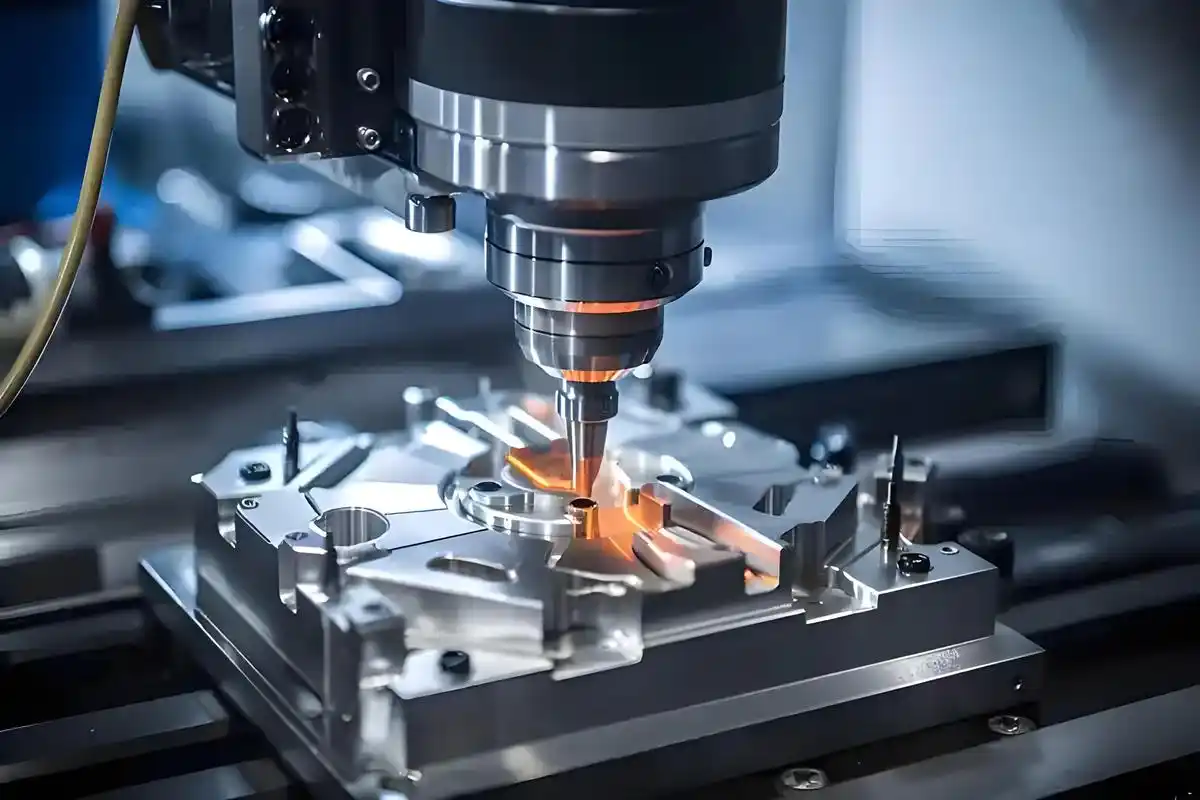
Are you a metalworking enthusiast? Are you interested in creating intricate works of art or logos from metal? Then welcome to explore the various applications of this industry, from metal marking, engraving, stamping, and etching to grinding and milling. We'll showcase the unique charm of different processing techniques.
What is Metalworking?
Metalworking is the production activity of applying various processes to metal materials to manufacture the required parts, production line components, or large-scale structures. From many large projects such as oil drilling platforms, ships, and bridges to small parts like engines, and even jewelry, metalworking is used to manufacture many products.
Therefore, a wide range of technologies, processes, and tools are needed to work with metal and ultimately achieve the desired results.
The processes of metalworking can be broadly categorized into three types: metal forming, metal cutting, and metal joining. In this article, we will focus on the latest technologies applied to metal cutting.
Cutting refers to the process of removing material using various tools to achieve a specified form. The finished part should meet specified requirements in terms of size, workmanship, design, and aesthetics. Cutting produces only two products—scrap and finished product. After metal is machined, the scrap is called metal chips.
Cutting processes can be further divided into three main categories:
- Processes that produce chips are classified as one category, also known as machining.
- Processes that involve burning, oxidizing, or evaporating materials are classified as another category.
- Processes involving a mixture of both, or other processes, are classified as another category, such as chemical cutting.
Drilling holes in metal parts is the most common example of the first category (chip-producing) processes. Using a cutting torch to cut steel plates into smaller pieces is an example of the burning category. Chemical grinding is an example of a special process that uses etching chemicals to remove excess material.
Cutting Techniques
There are many techniques for cutting metals, such as:
- Manual techniques: such as sawing, chiseling, and shearing.
- Mechanical techniques: such as stamping, grinding, and milling.
- Welding/burning techniques: such as those using lasers, oxy-fuel combustion, and plasma combustion.
- Etching techniques: using water jets, electrical discharges, or abrasive streams.
- Chemical techniques: photochemical machining or etching.
As you can see, there are many different types of metal cutting methods. Understanding and mastering these is a good starting point, enabling you to utilize all available technologies in this fascinating field. Several Metalworking Techniques
It's impossible to cover all of these techniques in one article. We will select six and explain what they are, their respective tools, and possible use cases.
Metal Marking
Direct part marking is a series of techniques for creating permanent marks on metal for parts traceability, industrial component labeling, decoration, or any other purpose.
Marking metal has been practiced since humans began using metal tools such as axes and spears; metal marking is as old as the invention of smelting technology. However, current technology has advanced to the point where humans can create highly precise and complex marks for virtually any imaginable product. Marking can be achieved through a variety of techniques, including engraving, embossing, die casting, stamping, etching, and grinding.
Metal Engraving
Engraving is a technique primarily used to carve patterns, text, drawings, or codes onto metal surfaces to obtain products with permanent markings, or to print engravings on paper using engraved metal. Engraving mainly uses two techniques: laser and mechanical engraving. Although laser technology is very common and easy to use, it provides us with the highest quality metal engraving process because it is computer-aided and can be precisely pre-defined on various surfaces to achieve optimal engraving results. Mechanical engraving can be done manually or using more reliable scalers or CNC machine tools.
Metal engraving technology can be used for: personalized jewelry, fine art, photopolymer laser imaging, industrial marking technology, engraving sports trophies, and printing plate making.
Metal stamping is not a subtractive manufacturing process. It involves folding metal sheets into various shapes using molds. Household appliances we encounter daily, such as frying pans, ladles, cooking pots, and plates, are all made using stamping. Stamping presses are also used to manufacture ceiling materials, medical equipment, machine parts, and even coins. Their products are widely used in medical, electronics, electrical, automotive, military, HVAC, pharmaceutical, commercial, and machinery manufacturing industries.
Metal stamping machines come in both mechanical and hydraulic types. Stainless steel, aluminum, zinc, and copper sheets are generally cast, stamped, and cut into three-dimensional objects using these machines. Due to their relative ease of processing, they have a very high product turnover rate. Stamping presses can be arranged in series to process metal raw materials, using different steps to ultimately transform them into finished parts and separate them from the processing line.
Presses are widely used and can produce a wide variety of products. These products come in different sizes and designs, with most intended for industrial use. Typically, you simply send a sample and a sheet of metal to a metal stamping company to obtain the desired product.
Metal Etching
Etching can be achieved through photochemical or laser processes. Laser etching is currently the most popular technology. This technology has developed exponentially over time. It refers to high-precision etching using a coherent, amplified beam of light on a metal surface.
Laser etching is the cleanest method of marking because it does not involve the use of corrosive agents or noisy drilling or grinding processes. It simply uses a laser beam to evaporate material according to a computer program, creating precise images or text. Due to continuous technological advancements, it is becoming increasingly smaller, and researchers or laser enthusiasts can now purchase newer, more affordable laser equipment.
Chemical Etching
Chemical etching is the process of exposing a portion of a metal sheet to a strong acid (or etchant), thereby cutting patterns into it and creating the designed shape in grooves (or cuts) within the metal. It is essentially a subtractive process that uses etchant chemistry to produce complex, high-precision metal parts. In basic metal etching, the metal surface is coated with a special acid-resistant coating. Parts of the coating are scraped off by hand or mechanical means, and the metal is then placed in a strong acid bath. The acid erodes the uncoated metal, leaving the same pattern as the scraped coating. Finally, the metal is removed and the workpiece is cleaned.
Photolithography refers to the photographic process applied to the acid-resistant layer on a metal surface. A key difference between this method and mechanical or manual scraping techniques before chemical etching is that the applied acid-resistant layer is also irradiated to create a photoresist layer, which helps produce highly accurate and reproducible patterns.
This field utilizes a wide variety of machines. These include fiber lasers, CO2 lasers, and UV lasers.
Metal grinding is the physical abrasion of a workpiece using cutting tools (grinding tools). It is typically used to smooth rough edges, deburr, grind welds, remove chips, create sharp cutting edges, or give metal parts a unique finished appearance. Grinding is usually the final step after a part has been engraved, stamped, etched, or otherwise processed into a metal part.
Below are six main types of grinding machines and their respective applications.
— Belt Grinding Machines: Primarily use an electric belt coated with abrasive to grind metal surfaces to achieve the desired finish.
— Grinding Wheel Machines: These are very inexpensive hand tools that use a table-mounted, electrically driven grinding wheel to grind agricultural tools, small metal parts, etc.
— Cylindrical Grinding Machines: This type of grinding machine primarily works on cylinders, cams, or a combination of both. It consists of a rotating grinding wheel and a feed system that feeds the workpiece into the grinder. Some models of cylindrical grinders employ built-in cooling systems to keep the workpiece as close to room temperature as possible for optimal grinding results.
— Surface Grinding Machines: This is the most commonly used type of grinding machine. Surface grinding is mainly used for finishing operations. The grinder polishes metal surfaces by rotating a grinding wheel, giving them a more refined appearance or a desired functional surface.
— Drill Bit Grinding Machines: These grinding machines are mainly used for grinding various types of drill bits.
— Coordinate Grinding Machines: This type of grinding machine is used for finishing tooling fixtures and molds. Their primary function is grinding bushings and pins. They can also be used to grind complex surfaces that cannot be completed on milling machines. These grinding machines enable us to produce drills with high precision and complex geometries.
As can be seen from the examples of grinding machines above, grinding machines are used in many fields, including manufacturing engine blocks, aerospace, marine, and automotive parts, as well as molds for other metal processing.
Metal Milling
Milling is a machining process that cuts material from a metal surface to form a final shape. A milling machine consists of a milling cutter rotating on a spindle and a worktable that can move in multiple directions relative to the work surface. As the worktable moves along the X and Y axes, the spindle typically moves vertically, milling complex shapes according to a pre-designed plan. Milling machines can be operated manually or automatically by a numerical control (CNC) system. They can perform a variety of complex operations, including grooving, planing, drilling, thread milling, edge milling, etc.
The two most common types of milling machines are horizontal milling machines and vertical milling machines. Milling is a primary machining process for manufacturing engine blocks, gear components, threaded parts, and other similar components. They are primarily used for milling flat surfaces, but can also machine irregular surfaces. They are also used to manufacture drill bits, boring heads, gear hobbing, and grooving tools.
In summary, you should now be able to roughly distinguish these metalworking processes and choose the correct machining method for your needs.
Search
Categories List
Need More Details?
Contact me for details on creating and managing design projects, project features, and services and prices
Send Message
Please fill the form correctly to send us your requirement. We respond to all enquiries within 4 business hours.