
NEWS
Professional attitude and strict quality control
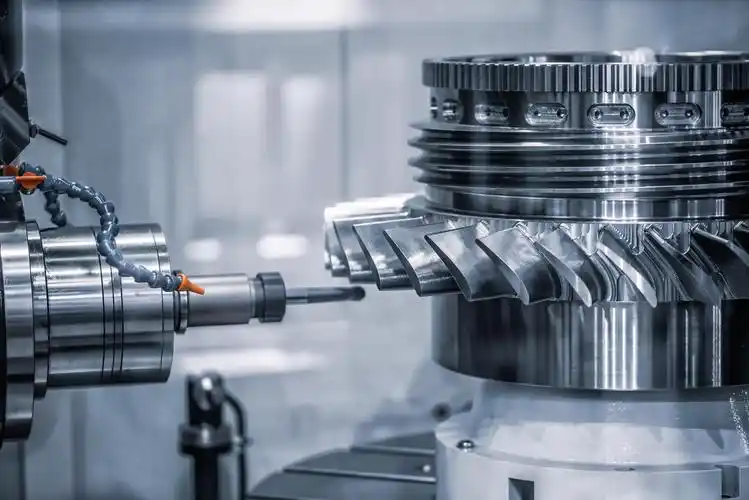
Metalworking is a process of changing the shape, size, or properties of metallic materials through specific methods. This technology has spanned the development of human civilization, from ancient forging to modern precision manufacturing, and has always occupied an important position in industrial production. Metalworking involves not only changing the shape of materials but also improving the physical properties of metals to make them more suitable for practical applications.
Metalworking methods are mainly divided into three categories: hot working, cold working, and special processing. Each method has its unique advantages and applicable scenarios, which will be explained below.
1. Hot Working Processes
Hot working refers to processing procedures performed above the recrystallization temperature of the metal. Common hot working methods include casting, forging, and hot rolling.
Casting involves pouring molten metal into a mold and allowing it to cool and solidify to obtain the desired shape. This method is suitable for manufacturing parts with complex structures, such as engine blocks and machine bases. Compared with other processing methods, casting can form complex structures in one step, reducing subsequent processing steps. However, castings may have defects such as porosity and shrinkage, and their mechanical properties are generally lower than those of forged products.
Forging is a process that uses hammering or pressure to plastically deform heated metal in a solid state. Forging refines the grain structure of metals, improving the strength and toughness of materials. Common forgings include important load-bearing components such as shafts and gear blanks. Compared to casting, forgings have superior mechanical properties, but their shape complexity is limited.
Hot rolling is a processing method that uses rolls to press metal billets at high temperatures, reducing their cross-section and increasing their length. Hot-rolled products include basic metal materials such as plates and profiles. The hot rolling process improves the casting structure of metals and increases material density, but the surface quality and smoothness of the products are not as good as cold-rolled products.
2. Cold Working Processes
Cold working refers to processing processes performed below the recrystallization temperature of metals, including cold rolling, cold drawing, and stamping.
Cold rolling is a process of rolling metal materials at room temperature. Compared to hot rolling, cold rolling can achieve products with higher precision, better surface quality, and superior mechanical properties. Cold-rolled sheets and strips are widely used in automobile manufacturing, home appliance production, and other fields. Cold rolling requires greater processing force and causes work hardening of the metal, sometimes necessitating intermediate annealing.
Cold drawing is a processing method that applies tensile force to a metal billet using a die, reducing its cross-section and increasing its length. Cold-drawn wires and tubes are characterized by precise dimensions and smooth surfaces. Compared to hot-drawn products, cold-drawn products have higher strength but reduced plasticity.
Stamping is a processing method that uses a die to apply pressure to a sheet metal, causing it to separate or plastically deform. Stamping processes are highly efficient and suitable for mass production, such as automotive body panels and electronic components. Stamped parts have good dimensional consistency, but the die manufacturing cost is higher, making it suitable for large-scale production.
3. Special Machining Processes
With technological advancements, a series of special machining methods have emerged, including electrical discharge machining (EDM), laser machining, and ultrasonic machining.
Electrical discharge machining (EDM) is a method of removing material using the electro-erosion phenomenon generated by pulsed spark discharge between the tool electrode and the workpiece. This method is particularly suitable for machining high-hardness conductive materials and complex-shaped cavities and holes. Compared to traditional cutting processes, electrical discharge machining (EDM) is not limited by material hardness, but its processing efficiency is lower and it can only process conductive materials.
Laser processing is a process that uses a high-energy-density laser beam to cut, weld, or surface-treat materials. Laser processing features high precision, a small heat-affected zone, and strong adaptability, and is widely used in the manufacturing of precision instruments and electronic components. Compared to traditional machining, laser processing requires no physical contact and avoids tool wear, but the equipment investment is higher.
Ultrasonic machining uses ultrasonic vibrations on the tool face to process the workpiece through an abrasive suspension. This method is particularly suitable for processing hard and brittle materials such as glass and ceramics. Compared to traditional cutting methods, ultrasonic machining does not generate residual stress, but its processing efficiency is limited.
The selection of metal processing methods requires consideration of many factors, including material properties, part shape, dimensional accuracy requirements, and production costs. Different processing methods are often used in combination to leverage their respective advantages. For example, a part may first obtain its basic shape through casting or forging, then undergo machining to achieve precise dimensions, and finally undergo heat treatment to improve its properties.
Compared to other material processing technologies, metal processing has distinct characteristics. Compared to plastic injection molding, metal processing typically requires higher energy consumption and equipment investment, but metal products offer higher strength, stiffness, and temperature resistance. Compared to composite material preparation, metal processing technology is more mature and offers better quality stability, although composite materials may have advantages in specific strength and corrosion resistance.
The development trend of metal processing technology is to improve precision, efficiency, and automation. Modern processing equipment often integrates sensors and control systems, enabling real-time monitoring of the processing process and ensuring consistent product quality. The development of new processes is also continuously expanding the possibilities of metal processing to meet the growing demand for metal components across various industries.
In terms of resource utilization, metal processing is closely related to material recycling. Chips and waste generated during processing can be recycled and remelted, reducing resource waste. Compared to some single-use non-metallic materials, metallic materials have the advantage of reusability, which aligns with the concept of sustainable resource utilization.
Advances in metal processing technology have also driven the development of related industries. From aerospace to everyday consumer goods, from energy equipment to electronics, metal components play an irreplaceable role. Metal processing, as a crucial step in giving metal materials their final form and properties, directly impacts the quality and performance of the final product.
When selecting a metal processing method, it's essential to comprehensively consider material costs, processing expenses, equipment investment, and product requirements. For example, machining may be more economical for small batches of complex parts, while stamping or casting may be more cost-effective for large batches of simple-shaped parts. A reasonable process selection can control production costs while meeting product requirements.
During metal processing, the control of process parameters has a significant impact on product quality. For instance, in heat treatment, heating temperature, holding time, and cooling rate all affect the final performance of the parts. Experienced process engineers can develop reasonable process specifications based on material properties and product requirements, ensuring stable product quality.
With the development of computer technology, numerical simulation is increasingly widely used in metal processing. Computer simulation can predict material flow, temperature changes, and stress distribution during processing, helping to optimize process parameters and reduce trial production costs. This significantly improves the efficiency and reliability of process development compared to traditional methods relying on trial and error.
Metal processing is a fundamental manufacturing technology, and its development level is an important indicator of a country's manufacturing capabilities. From ordinary components to high-end equipment, all rely on the support of metal processing technology. With the emergence of new materials and new requirements, metal processing technology will continue to develop and improve, providing higher-quality metal products for all industries.
Search
Categories List
Need More Details?
Contact me for details on creating and managing design projects, project features, and services and prices
Send Message
Please fill the form correctly to send us your requirement. We respond to all enquiries within 4 business hours.