
NEWS
Professional attitude and strict quality control
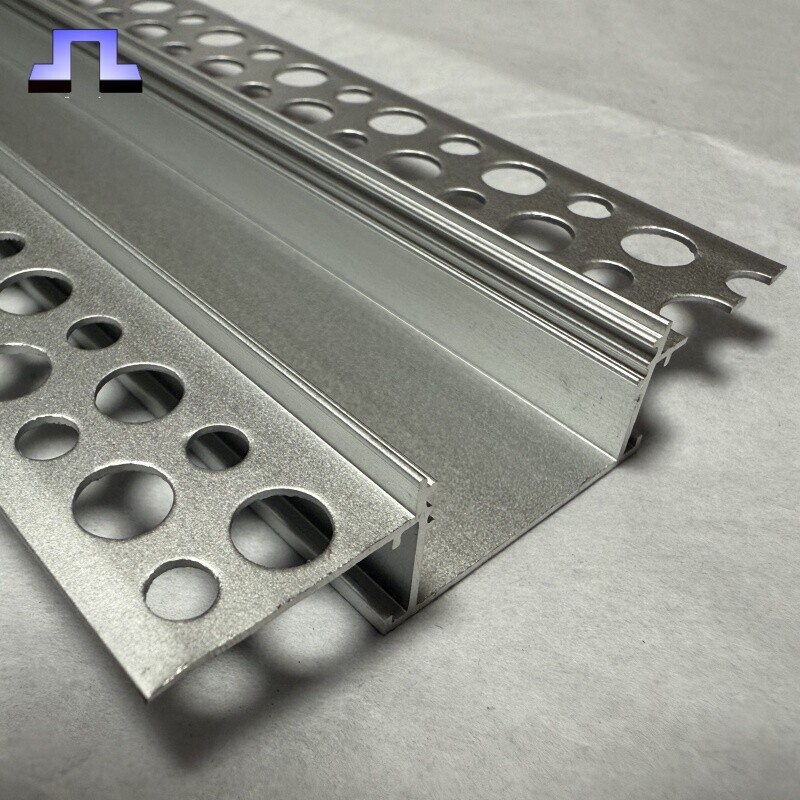
Among all aluminum profile series, 6063 aluminum profiles are the most widely used and have the broadest application range. Many people want to know how 6063 aluminum profiles are extruded. Below, we will explain the 6063 aluminum profile extrusion production process in detail.
1. Raw Material Selection:
6063 aluminum profiles are obtained by heating aluminum rods and extruding them through a die. The aluminum rods are formed by melting and casting aluminum ingots, and are called the raw materials for 6063 aluminum profiles. The raw materials directly affect the performance of the aluminum profile product.
The production of aluminum rods requires high technical standards and industry specifications to ensure the performance of industrial aluminum profiles. Several key points should be considered in aluminum rod casting: ① Content of active impurities; ② Alloy composition; ③ Melt superheat temperature; ④ Flow guiding method; ⑤ Melt movement relative to the crystallization plane; ⑥ Cooling rate; ⑦ Casting speed of 6063 aluminum rods.
2. Aluminum Rod Heating:
Heating aluminum rods requires strict temperature control. Excessive or insufficient temperature will directly affect the hardness of the final product. Therefore, strict temperature control is essential during both heating and cooling processes.
3. Mold Design:
6063 aluminum profiles are the final product formed by extruding heated aluminum rods through a mold. The mold is a high-precision instrument designed to extrude profiles of the required specifications and cross-sections.
The design and maintenance of the mold should pay attention to the following: ① The structure of the mold must first meet production requirements and comply with basic physical and mechanical principles to ensure that the produced product achieves the intended performance. ②: The material and hardness of the die must be appropriate to avoid deformation, scratches, and other hard damage during the extrusion process, which would affect the final product quality. ③: The die should be cleaned and inspected regularly, and any problems should be repaired promptly to avoid scratches, burrs, and other hard damage during the extrusion process, which would seriously affect the quality of the industrial aluminum profiles.
4. Aluminum Profile Extrusion:
Currently, the standard extrusion presses used for 6063-T5 industrial aluminum profiles are between 1300 and 1600 tons. These standards are sufficient for the normal production of the 6063-T5 series industrial aluminum profiles.
Important factors in the industrial aluminum profile extrusion process: ① Temperature control: For extrusion production, extrusion temperature is the most basic and critical process factor. Extrusion temperature has a significant impact on product quality, production efficiency, die life, and energy consumption. ② Extrusion speed: The extrusion speed must be carefully controlled during the extrusion process. Extrusion speed has a significant impact on the deformation heat effect, deformation uniformity, recrystallization and solution treatment processes, the mechanical properties of the product, and the surface quality of the product. ③ In-machine quenching: Quenching of 6063-T5 is to preserve the Mg2Si alloy, which is dissolved in the base metal at high temperature, after rapid cooling to room temperature. The cooling rate is usually proportional to the content of the strengthening phase. The minimum cooling rate for strengthening 6063 alloy is 38℃/min, making it suitable for air-cooled quenching. Changing the fan speed and rotation speed can alter the cooling intensity, reducing the temperature of the product to below 60℃ before tension straightening.
5. Aluminum profile straightening and correction:
After extrusion, aluminum profiles will have certain deviations. After forming, a straightening machine is used for straightening and correction to bring the freshly extruded aluminum profiles within the required tolerance range. Straightening and correction must be performed using a straightening machine to ensure accuracy.
6. Artificial aging:
Extruded aluminum profiles have low hardness before aging and cannot be used as finished products. Therefore, generally, aging is necessary to improve strength.
Production process control: ① Ingot temperature control: The ingot temperature must be measured before extrusion, and production can only proceed after it meets the process requirements. ② Online quenching process: Solution quenching is a fundamental prerequisite for aging; without solution quenching, aging is meaningless. Therefore, at the extruder outlet, the online quenching process (air quenching, air-mist quenching, water quenching, etc.) should be selected based on the ingot grade, profile wall thickness, extrusion speed, and quenching equipment conditions to ensure that the quenching cooling rate meets the alloy's quenching sensitivity requirements. ③ Aging furnace temperature setting and control: There is usually a certain error between the aging furnace temperature and the surface temperature displayed on the furnace. The surface temperature should be set according to the actual furnace temperature, and fluctuations in the aging furnace temperature should be closely monitored. ④ Aging holding: Aging must be strictly performed according to the process requirements, and the holding time should be appropriate to prevent insufficient hardness due to under-aging or over-aging.
Billet loading and furnace loading: ①: Extrusion loading should not be too dense; there should be gaps between billets, especially for small, thick billets in poorly ventilated areas. When billets are loaded together with smaller or sheet billets in one frame, the billets should be placed at the bottom to facilitate air circulation during aging. ②: Before aging, 6063 special alloy and ordinary 6063 alloy should be loaded into the furnace separately. If aging in the same furnace is necessary due to production reasons, the aging process for the special alloy should be used.
7. Sandblasting + Oxidation Process:
After extrusion forming, aluminum profiles have obvious stretch marks on the surface, and the surface micropores are relatively large and rough. Sandblasting is necessary. During sandblasting, the impact of the diamond abrasive causes changes in the surface microstructure of the aluminum profile. Accompanying the plastic deformation process, crystal slippage occurs, leading to an increase in dislocation density within the subgrains, resulting in a smoother profile surface.
The surface treatment of industrial aluminum profiles involves the following steps: ① Sandblasting; ② Pre-treatment; ③ Degreasing; ④ Acid etching; ⑤ Alkali etching; ⑥ Neutralization; ⑦ Oxidation; ⑧ Sealing. Currently, many industrial aluminum profile manufacturers on the market reduce costs by skipping the surface oxidation process, directly using a silver-white oxidation treatment. The surface appears bright silver, but the coating is generally between 5μ-6μ, far below industry standards (10μ-12μ).
8. Packaging:
Due to the very high quality requirements and emphasis on overall aesthetics, packaging is extremely rigorous. The overall packaging process includes: ① Applying a film to the profile surface to prevent scratches; ② Wrapping with pearl cotton; ③ Wrapping with an outer layer of kraft paper to prevent abrasion from hard objects.
Because of the relatively stable structural performance of aluminum profiles, they are welcomed by many consumers. To help everyone better understand the extrusion production process of 6063 aluminum profiles, we aim to explain its production process and advantages, so that you won't encounter any difficulties during the purchase process.
Search
Categories List
Need More Details?
Contact me for details on creating and managing design projects, project features, and services and prices
Send Message
Please fill the form correctly to send us your requirement. We respond to all enquiries within 4 business hours.