
NEWS
Professional attitude and strict quality control
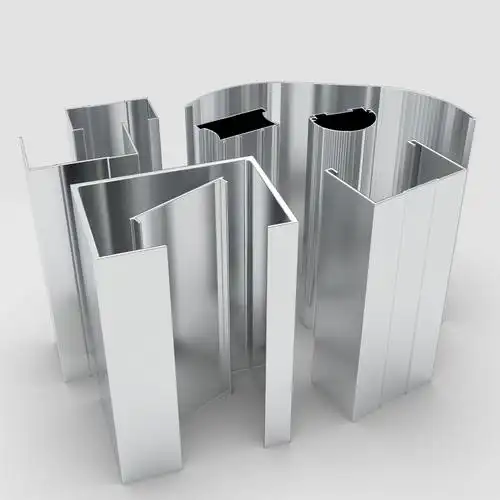
Aluminum is the most abundant naturally occurring metal in the Earth's crust and a fundamental element of modern life. Compared to commercial aluminum production 125 years ago, people today prefer to use aluminum. Many of the conveniences of our world today would not exist without it.
Aluminum extrusion has numerous applications in construction, automotive, electronics, aerospace, energy, and other industries. The aluminum extrusion market is growing rapidly worldwide.
The increased demand for aluminum is primarily due to the following reasons:
1. Urbanization – Known for its vast scale, population, and generally underdeveloped economies, it has growth potential. The rapid development of the real estate industry has increased the consumption of aluminum for construction and residential use, leading to a gradual upward trend in metal price forecasting models over the years.
2. Aluminum is a crucial raw material for many products, offering low price and high quality.
All products undergo a process. In aluminum extrusion, a profile passes through a die and is shaped by the die opening. Therefore, here are ten steps to explain the extrusion process.
Step 1: Preparing the Extrusion Die and Moving it to the Extruder
Unless a ready-made die is available, a round die is machined to H-13 steel. Preheating before extrusion is crucial. Adjust to 450-500 degrees Celsius to ensure alloy life. This allows for uniform metal flow. After preheating, the die is now ready to be loaded into the extruder.
Step 2: Preheating the Aluminum Billet Before Extrusion
The billet is a solid cylindrical block of aluminum alloy. After being removed from the longer alloy, it is preheated in an oven at 400-500 degrees Celsius. This provides a suitable level of ductility for the extrusion process.
Step 3: Transferring the Billet to the Extruder
After preheating, the billet is mechanically moved onto the extruder. Lubricant (release agent) is applied to the billet and the slide block to prevent them from sticking together. The billet is then loaded into the press.
Step 4: Pressing the Billet into the Container with a Press Head
In this step, a hydraulic ram applies pressure up to 15,000 tons as the extruder is loaded with the malleable billet. As pressure is applied, the billet is pushed into the extruder's container. Finally, the material expands significantly, filling the container walls.
Step 5: Extruding Material Through the Die
In this stage, the alloy is pressed against the extrusion die as it fills the container. The aluminum material is sealed by continuously applying pressure. Then, as it emerges from the die opening, a profile is formed.
Step 6: Smoothly Extruding the Extruder from the Press
This time, a puller is used to grip and guide the extruder from the smooth exit of the press. The profile is then uniformly cooled by a water bath or an overhead fan as it moves along the runner.
Step 7: Cutting the Extruder to Milling Cutter Length
Temperature is crucial at every step. The next step is now to shear the hot saw from the extrusion process, as the extruder completes its full table length. Although the extrudate undergoes a cooling process after exiting the press, it is not completely cooled.
Step 8: Fire Extrusion
Mechanically, the extrusions of the mill length are moved separately from the running table to the cooling table. Once the profiles reach room temperature, they need to be stretched.
Step 9: Dynamic Extrusion to Stretcher and Adjustment
The profiles have some natural flex that needs correction. Therefore, they are transferred to a stretcher. The ends of the profiles are mechanically clamped. They are stretched until they become completely straight and placed to specifications.
Step 10: Dynamic Extrusion to Finish Saw and Cut Length
Once the extrusions are cut to table length and hardened, they are moved to a saw. This time, they are sawed to the predetermined length, typically 8-21 feet. Now, a T4 temper is applied to match the properties of the extrudate. The next step is to move them to an aging oven to achieve a T5 or T6 temper.
From a convenience standpoint, aluminum alloys are also a sustainable material choice in many markets. Therefore, most products we use today either contain aluminum or are made of aluminum. For a more energy-efficient future, aluminum is the answer.
Foshan Shengli Aluminum Co., Ltd. is a leading manufacturer integrating R&D, production, and deep processing, mainly producing industrial aluminum profiles and other metal parts. The company is located in Dali Town, Nanhai District, Foshan City, a famous aluminum capital of China. The company can provide aluminum extrusion and metal processing services. OEM/ODM services are available.
Search
Categories List
Need More Details?
Contact me for details on creating and managing design projects, project features, and services and prices
Send Message
Please fill the form correctly to send us your requirement. We respond to all enquiries within 4 business hours.