
NEWS
Professional attitude and strict quality control
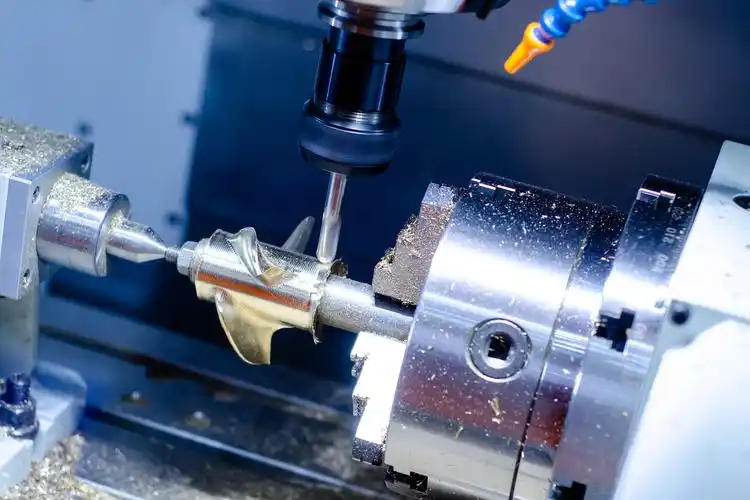
Error control in CNC machining is at the heart of manufacturing quality. From equipment precision to process optimization, systematic methods can reduce errors to as low as 0.001mm. Balancing cost and precision is essential for efficient production.
I. Basic Concepts of CNC Machining Errors
In modern manufacturing, Computer Numerical Control (CNC) machining technology is widely favored for its high precision and efficiency. CNC machining error refers to the deviation between the actual dimensions of the machined part and the design dimensions. This indicator directly relates to product quality and production efficiency. Understanding and controlling CNC machining errors is a core aspect of improving manufacturing levels.
CNC machining errors can generally be divided into two categories: systematic errors and random errors. Systematic errors include predictable deviations such as machine tool geometric errors and thermal deformation errors; while random errors stem from factors that are difficult to predict completely, such as tool wear and material inhomogeneity. According to industry standards, the machining error of ordinary CNC machine tools is generally controlled within the range of 0.01-0.05mm, while high-precision CNC machine tools can achieve ultra-precision levels of 0.001-0.005mm.
II. Main Factors Affecting CNC Machining Errors
1. Precision Level of the Equipment Itself
Different levels of CNC machine tools have different positioning accuracy and repeatability. High-end five-axis CNC machine tools typically have positioning accuracy within 0.005mm, while ordinary three-axis machine tools may only have an accuracy of around 0.02mm. The service life of the equipment is also an important factor; as mechanical components wear, the accuracy of the machine tool gradually decreases, so regular maintenance and calibration are crucial.
2. Influence of the Tooling System
The material, geometric parameters, and wear degree of the tool directly affect machining accuracy. Carbide tools can maintain dimensional stability for a longer time compared to high-speed steel tools; the radial runout error of the tool must be controlled within 0.01mm to ensure machining accuracy; at the same time, thermal deformation of the tool during the cutting process will also introduce additional errors, which need to be mitigated through coolant and cutting parameter optimization.
3. Workpiece Material Characteristics
Different materials behave significantly differently during the machining process. Non-ferrous metals such as aluminum alloys are relatively easy to achieve high precision, while difficult-to-machine materials such as titanium alloys are prone to larger errors. Residual stresses within the material, when released during machining, can lead to workpiece deformation. This "stress rebalancing" phenomenon is a critical issue in precision machining. Pre-machining stress relief heat treatment can effectively mitigate this problem.
4. Process Parameter Settings
The rational selection of parameters such as cutting speed, feed rate, and cutting depth significantly impacts machining accuracy. Excessive feed rates can lead to increased tool vibration, while excessively small cutting depths may cause the tool to "slide" on the workpiece surface instead of cutting, both of which reduce machining accuracy. Experienced process engineers can find the optimal parameter combination based on material and tool characteristics.
III. Practical Methods for Controlling CNC Machining Errors
1. Temperature Compensation Technology
Changes in ambient temperature and cutting heat generated during machining can cause machine tool structural deformation, thus affecting machining accuracy. Modern high-end CNC machine tools commonly use a network of temperature sensors to monitor the temperature of critical parts in real time and compensate for thermal deformation errors through software algorithms, reducing thermal deformation errors by more than 60%.
2. Online Measurement and Feedback System
Online measuring devices integrated into the CNC system can monitor workpiece dimensions in real time during machining. If deviations exceed the allowable range, the system can automatically adjust the tool path or compensation values. This closed-loop control system keeps machining errors within a very small range, and is particularly suitable for the production of precision parts in large quantities.
3. Advanced Error Prevention Strategies
Considering machining feasibility from the design stage is an important method for preventing errors. Reasonable tolerance specifications, appropriate datum selection, and avoiding thin-walled and cantilevered structures are design principles that can significantly reduce machining difficulty and error risk. Simultaneously, adopting a multi-stage machining strategy, performing rough machining to remove most of the material first, and then performing finish machining, can effectively control the final accuracy.
IV. CNC Machining Accuracy Requirements in Different Industries
The aerospace industry has extremely high requirements for the machining accuracy of critical components, usually requiring control within 0.005 mm; medical devices, especially implantable parts, require a surface roughness of less than Ra 0.2 μm; while the accuracy requirements for ordinary mechanical parts are relatively relaxed, generally within the range of 0.02-0.05 mm to meet usage requirements.
It is worth noting that pursuing excessively high accuracy will lead to a sharp increase in production costs. The reasonable approach is to determine the appropriate tolerance level based on the actual functional requirements of the product, controlling manufacturing costs while ensuring quality. Experience shows that increasing tolerance requirements by one level can increase machining costs by 30%-50%.
Controlling CNC machining errors is a systematic engineering process that requires coordinated optimization from multiple aspects, including equipment, processes, and personnel. Through scientific management and technological innovation, modern manufacturing enterprises are fully capable of controlling machining errors within an ideal range to meet increasingly stringent product quality requirements. In the future, with continuous technological advancements, CNC machining accuracy will undoubtedly reach new heights, providing stronger support for the development of the manufacturing industry.
For manufacturing companies, understanding the mechanisms and control methods of CNC machining errors not only helps improve product quality but also optimizes production processes and reduces scrap rates, thereby enhancing overall competitiveness. In the future, with technological advancements, CNC machining accuracy will undoubtedly reach new heights, creating more possibilities for the manufacturing industry.
Search
Categories List
Need More Details?
Contact me for details on creating and managing design projects, project features, and services and prices
Send Message
Please fill the form correctly to send us your requirement. We respond to all enquiries within 4 business hours.