
NEWS
Professional attitude and strict quality control
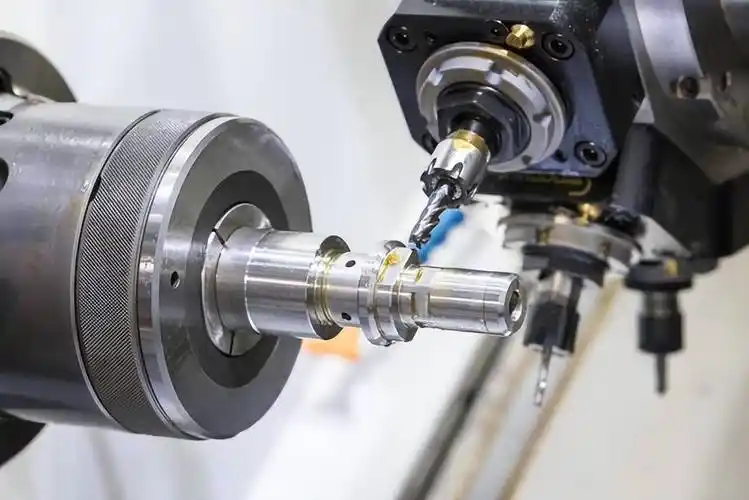
Cnc metal machining is a process that uses mechanical means or heat treatment to cut, shape, join, and finish metal raw materials (such as steel, aluminum, copper, titanium, etc.) to obtain parts or products with desired geometry, dimensions, properties, or surface quality. It is one of the fundamental processes in manufacturing and is widely used in machinery, automotive, aerospace, electronics, electrical appliances, mold making, and other fields.
1. Classification of Metal Machining Processes
Metal machining can be classified according to the processing method, whether material is removed, and whether molds are used.
a. Metal Cutting Machining
Metal cutting uses mechanical means to remove a portion of metal to achieve the desired shape and size of the workpiece. Cutting is an important branch of metal manufacturing, and the machinability of a material is often used as a key indicator to evaluate its processing potential and application prospects. Common metal machining methods include CNC milling, turning, drilling, and grinding. Although these processes are all based on the principle of metal cutting, they differ significantly in operation methods and application scenarios.
Metal cutting processes are particularly common in the metal manufacturing field due to their strong manufacturing adaptability and wide material compatibility. With the right cutting tools and sufficient technical skill, almost any metal material can be processed.
b. Metal Forming
Metal forming refers to the plastic deformation of metal by applying external force without removing the material.
Extrusion molding is a commonly used method. Extrusion molding is a process in which raw materials are heated to a plastic state, and then high pressure is applied through a hydraulic press to force the blank within a mold cavity (or extrusion cylinder) to undergo plastic deformation, forming a product with a specific cross-sectional shape. This method is suitable for processing various metal materials, especially aluminum, copper, steel, and other alloys. Metal extrusion molding plays an important role in industrial manufacturing, particularly in the production of various building and structural profiles, pipes, foils, and other products.
c. Hot Working
Using heat energy to change the shape or properties of metal.
Metal casting is one of the oldest metal processing techniques. This process involves heating the metal to its melting point, turning it into a liquid, and then pouring the molten metal into a mold with a specific shaped cavity (the mold itself is also a metal product).
The molten metal solidifies within the mold, filling the cavity and forming the desired shape. Finally, an ejector device removes the casting from the mold, and after subsequent processing, the final product is obtained.
Casting plays a crucial role in metal processing, offering several advantages:
Wide Applicability: Casting is suitable for almost all metals, including iron, steel, aluminum, copper, and their alloys.
Manufacturing Capability for Complex Shapes: Casting can easily manufacture complex geometries, even precision parts that are difficult to produce using traditional machining processes.
High Production Efficiency: Casting can mass-produce parts with shapes close to the final product, reducing the need for subsequent processing, thereby increasing production efficiency and saving costs.
Enhanced Material Properties: Through appropriate heat treatment processes, casting can improve the mechanical properties of metals, such as hardness and strength, improving the overall quality of the final product.
d. Metal Cutting Processes
Cutting processes use energy such as electricity, light, heat, or chemicals to cut metals, suitable for special requirements such as high hardness and complex structures. In recent decades, technologies such as laser cutting, plasma cutting, waterjet cutting, and flame cutting have become increasingly popular due to their higher efficiency, greater power, and faster speed.
e. Welding
Welding is one of the most common manufacturing processes in metalworking workshops. Its basic principle is to heat dissipated metal parts to a molten state at their junction, then allow them to cool and solidify, ultimately forming a permanently joined whole. Welding allows two metal workpieces to be firmly joined together.
Welding processes are applicable to a wide variety of materials and come in many different types. Common metal welding processes include electric arc welding, argon arc welding (GMAW), resistance welding, and friction welding.
Each welding method has its own unique metal-joining mechanism and characteristics in its process parameters. Some methods generate heat through electric current, some through friction, while others may use an external heat source. The joint quality and potential defects vary between different welding processes, but their common goal is to firmly join two metal workpieces into one.
2. Commonly Used Materials in Metalworking
The types of metals suitable for metalworking are almost as numerous as the types of metals themselves. However, certain metals are more commonly used in metalworking due to their superior material properties, such as high strength and good machinability. The following are the characteristics and application areas of commonly used metals and their alloys:
Steel (ordinary steel, stainless steel, high-carbon steel), aluminum alloys, copper alloys (brass, bronze), magnesium alloys, high-performance alloys (titanium alloys, Inconel alloys), etc.
These metals and their alloys are widely used in metal processing due to their excellent physical and chemical properties, which can meet various high-precision and high-requirement manufacturing needs.
3. Future Development Trends in Metal Processing
With the continuous upgrading of industrial technology and the diversification of market demands, the metal processing industry is accelerating its development towards intelligence, high precision, and green sustainability. The following are some of the main future trends in this field:
a. Improved Intelligent Manufacturing and Automation
Traditional manual operation and single-machine control methods will be replaced by higher levels of automation and informatization. CNC machining equipment will be deeply integrated with the Internet of Things, the Industrial Internet, and big data systems to achieve equipment interconnection, data sharing, remote monitoring, and automated management. Industrial robots will also be widely used in multiple processes such as handling, welding, bending, and inspection, not only improving processing efficiency and stability but also significantly reducing labor costs and operational risks.
b. Integration of Additive and Subtractive Manufacturing
3D printing (metal additive manufacturing) will continue to expand its application scenarios in aerospace, medical, and mold-making fields. The future trend is deep integration with traditional subtractive machining (such as CNC) to achieve a combined "printing + cutting" manufacturing process, which offers both structural freedom and ensures precision and strength requirements.
c. Precision Machining and Adaptation to High-Performance Materials
With the development of high-end equipment manufacturing, higher requirements are placed on the precision, strength, and corrosion resistance of metal parts. The extensive application of high-performance materials (such as titanium alloys, nickel-based alloys, and high-temperature alloys) is driving the upgrading of metal processing equipment towards higher rigidity, greater power, and higher stability.
4. What can we do for your metal processing?
CNC metal processing services provide metal prototyping before full-scale production to help you test the form, fit, and functionality of your product design.
Our experienced machinists and engineers are equipped with multiple high-speed cutting machines to meet the needs of most manufacturing projects and provide fast turnaround times.
Our five-axis CNC metalworking capabilities enable us to produce precision metal parts with more complex shapes and tighter tolerances. Multi-axis machining capabilities allow us to perform turning, boring, drilling, hexagonal machining, milling, threading, and tapping at virtually any angle.
Flexible production methods and a 24/7 machine shop make our metalworking services ideal for small-batch production of custom metal parts.
We also offer integrated finishing services to meet your needs. After machining, we provide special surface treatment options for your CNC metal parts.
Search
Categories List
Need More Details?
Contact me for details on creating and managing design projects, project features, and services and prices
Send Message
Please fill the form correctly to send us your requirement. We respond to all enquiries within 4 business hours.