
NEWS
Professional attitude and strict quality control
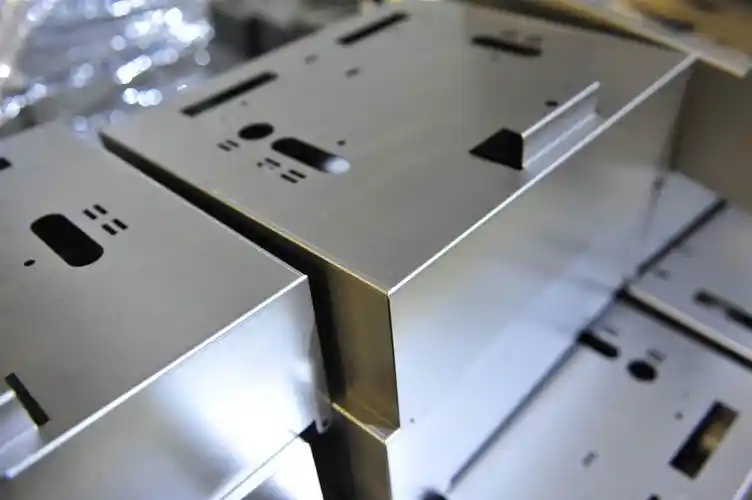
I. The Importance of Metalworking
Metalworking, a production activity that combines technology with metal materials, encompasses numerous fields. From large structures such as oil drilling platforms, ships, and bridges, to small components like engines, and even exquisite jewelry, all rely on this technology.
Metalworking processes are applied to various production activities, from large structures to small parts and jewelry, and are key to achieving the necessary shapes and dimensions of products. Metalworking requires not only sophisticated techniques and tools, but also ingenious design and precise operation.
II. Six Metalworking Processes
1. Metal Cutting
Cutting technology achieves the desired shape by removing material, including drilling and chemical grinding, each with its unique application scenarios. It removes material using various tools to achieve a predetermined shape and size. Cutting processes are not only diverse but also unique, such as drilling, torch cutting, and chemical grinding, each with its own specific applications and advantages.
Furthermore, metal processing involves many other technologies, such as manual techniques like sawing, chiseling, and shearing; mechanical techniques like stamping, grinding, and milling; and welding/combustion techniques like laser, oxy-fuel combustion, and plasma combustion.
2. Metal Marking Technology
Metal marking is used for permanent marking and is a diverse technology suitable for decorative and industrial applications. Metal marking technology is a series of processes for permanently marking metals, aiming to achieve functions such as part traceability, industrial component labeling, and decoration.
Metal engraving focuses on engraving patterns, text, or codes on metal surfaces to obtain products with permanent markings. Laser and mechanical engraving are two main techniques, with laser technology being highly regarded for its high precision and quality. In addition, metal engraving is widely used in jewelry making, art creation, industrial marking, and many other fields.
Stamping utilizes molds for forming and is widely used in the manufacturing of cookware and automobiles. The key equipment is the punch press. Metal stamping is a unique processing technique that uses molds to fold metal sheets into various shapes, rather than through subtraction. This technology plays a crucial role in the manufacture of household appliances such as frying pans and ladles, and is also applied in the medical, electronics, and automotive industries. The punch press is the core equipment in metal stamping, and comes in two types: mechanical and hydraulic. It can efficiently process metal raw materials into three-dimensional objects.
4. Metal Etching
Etching technology achieves high-precision metal surface manufacturing through laser and chemical methods, without the need for corrosive reagents. Laser etching has become a popular trend. It uses a coherent amplified beam to perform high-precision etching on the metal surface, creating accurate images or text without the use of corrosive reagents or noisy drilling and grinding processes.
Chemical etching, on the other hand, achieves subtraction by exposing metal sheets to strong acids or etchants, cutting patterns, and creating designed shapes in metal grooves. This process requires the use of etchant chemicals to produce complex and high-precision metal parts.
5. Photolithography
Photolithography uses photochemical processes to form an acid-resistant layer on a metal surface, achieving high-precision pattern creation. A variety of machines are available. Photolithography involves photographing the acid-resistant layer on the metal surface, creating a photoresist layer through irradiation, which helps produce highly accurate and reproducible patterns.
This field offers a variety of machines, such as fiber lasers, CO2 lasers, and UV lasers.
6. Metal Grinding
Grinding is the physical grinding of edges and the removal of burrs using cutting tools. Different grinding machines meet various needs. Grinding is a process of physically grinding a workpiece using cutting tools, commonly used for edge finishing, burr removal, and weld grinding. It is usually the final step after parts have undergone engraving, stamping, etching, or other metal processing.
Grinding machines come in various types to meet different application requirements.
Belt Grinding Machines: These grinding machines use an electric belt coated with abrasive to process metal surfaces to achieve the desired surface finish.
Grinding wheel machine: This is an economical hand tool that grinds agricultural tools, small metal parts, etc., by rotating a table-mounted, electrically powered grinding wheel.
Cylindrical grinder: Primarily used for grinding cylinders, cams, or a combination of both. It consists of a rotating grinding wheel and a feed system; some models also have a built-in cooling system.
Surface grinder: This is the most commonly used type of grinder, mainly used for finishing metal surfaces.
Drill bit grinder: Specifically designed for grinding various types of drill bits.
Coordinate grinder: Used for finishing tooling fixtures and molds, including grinding drill bushings and pins, as well as grinding complex surfaces.
7. Metal Milling
Milling uses a milling cutter to cut material into complex shapes, primarily machining flat and irregular surfaces. The milling process uses a rotating milling cutter to cut material from a metal surface to form the final shape.
Milling machines are equipped with a spindle and a worktable. The spindle moves vertically, and the worktable moves along the X and Y axes to mill complex shapes. Common types of milling machines include horizontal and vertical milling machines, which are the main machining processes for manufacturing engine blocks, gear components, threaded parts, and other similar components. Milling machines are not only used for milling flat surfaces but also for machining irregular surfaces and for manufacturing drill bits, boring heads, and other components. Milling machines can be operated manually or automatically by a CNC system, and can perform a variety of complex operations.
Metalworking requires a combination of technology, tools, design, and operation, driving the industry's development and innovation. Among the many metalworking processes, metal cutting technology occupies a pivotal position. It removes material using various tools to achieve a predetermined shape and size, thereby meeting the needs of various products.
Search
Categories List
Need More Details?
Contact me for details on creating and managing design projects, project features, and services and prices
Send Message
Please fill the form correctly to send us your requirement. We respond to all enquiries within 4 business hours.