
NEWS
Professional attitude and strict quality control
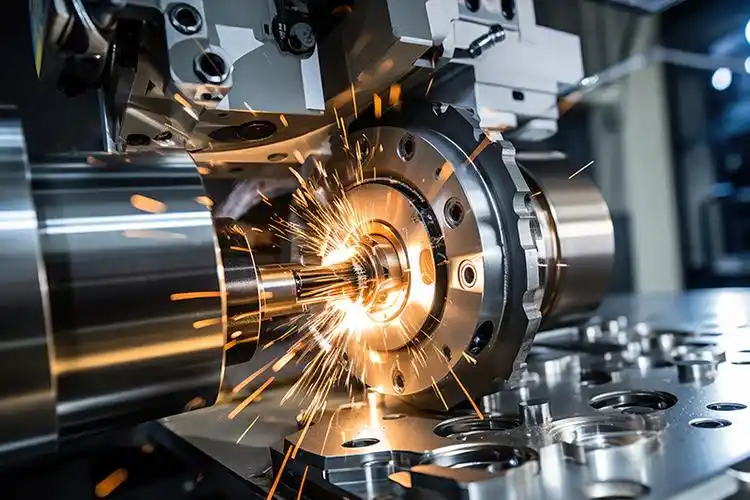
As a CNC engineer, I often have the opportunity to delve into various factories and understand the intricate processes that transform blueprints into physical objects. Today, I'd like to discuss a field that plays a cornerstone role in industrial production—CNC metal processing plants.
1. What is CNC Metal Processing?
CNC stands for "Computer Numerical Control." We can think of it as an extremely obedient and tireless "sculptor," wielding various high-speed rotating cutting tools. Metal processing, as the name suggests, is the process of shaping and machining metal materials.
Therefore, the essence of CNC metal processing is to precisely control the movement and cutting actions of machine tools through pre-programmed computer programs, performing a series of operations such as cutting, drilling, and tapping on metal raw materials (such as aluminum, steel, and copper), ultimately manufacturing precision metal parts that meet design requirements.
Compared to traditional lathes and milling machines that rely on manual operation, CNC technology has brought about a revolutionary change. It eliminates the heavy reliance on individual operator skill, elevating machining precision and efficiency to a whole new level. A complex 3D surface, which might take traditional craftsmen several days to complete and with inconsistent results, can be mass-produced with extremely high repeatability on a CNC machine tool simply by importing the correct program.
2. Core Processes and Steps of CNC Machining
To understand how a CNC metalworking factory operates, we can break it down into several key steps. These steps are interconnected and work together to ensure the quality of the final product.
First Step: Drawing Analysis and Process Planning. This is the starting point for all machining. Upon receiving a parts order, engineers first carefully study the 2D drawings or 3D models provided by the customer, understanding every dimension, tolerance, and technical requirement. Next, the process engineer plans the entire machining process: What material should the blank be made of? How many processes are required? Which surface should be machined first, and which hole later? What cutting tools should be used? How should cutting parameters (such as spindle speed and feed rate) be set? This process is like creating a detailed route map for a trip.
Second Step: Computer Programming After the process planning is completed, the "roadmap" needs to be translated into a "language" that the CNC machine tool can understand—G-code. Programmers use specialized CAM software to automatically generate toolpaths based on the 3D model and then post-process them into code suitable for the specific machine tool. The quality of the program directly determines machining efficiency, surface finish, and even the likelihood of accidents such as tool collisions.
Step 3: Machine Tool Preparation and Clamping. Before the program runs, the operator needs to prepare the corresponding tools and measure their precise lengths and radii, inputting the data into the machine tool's tool magazine. Fixtures are needed to firmly fix the metal blank onto the machine tool's worktable. The stability of the clamping is crucial; any slight looseness can lead to part scrap or tool damage.
Step 4: Machining Execution and Online Inspection. After the program is loaded and the tools and blank are ready, the machining center begins automatic operation. During this time, the machine tool will perform cutting and cooling according to instructions. In modern factories, operators are not idle. They need to closely monitor the machine tool's operating status and sometimes use measuring tools to spot-check critical dimensions during processing to ensure the process remains under control.
Step 5: Post-processing and Final Inspection. After parts are removed from the machine tool, they may still have burrs or sharp edges, requiring deburring manually or with specialized equipment. For products with special requirements, surface treatments such as sandblasting and anodizing may also be necessary. Quality inspectors use high-precision instruments such as coordinate measuring machines and profilometers to measure the finished products precisely, ensuring they fully meet the drawing requirements before leaving the factory.
3. Materials and Common Products in Metalworking
CNC metalworking has an extremely wide range of applications, covering almost all industries that require metal parts. Common processing materials include:
*Aluminum alloys: Due to their light weight, moderate strength, ease of processing, and relatively low cost, they are one of the most widely used materials.
*Stainless steel: With its excellent corrosion resistance and strength, it is commonly used in medical equipment, food machinery, and outdoor products.
*Carbon steel: High strength, low cost, widely used in structural components and mechanical parts.
*Brass and copper: Excellent electrical and thermal conductivity, commonly used in electronic and electrical components.
As for products, from small metal structural parts inside mobile phones and heat sinks in laptops used in our daily lives, to large parts in automobile engines, articulated arms of industrial robots, and even some precision components in the aerospace field, all rely on CNC machining. It is the foundation for modern industrial products to achieve functionality and improve reliability.
4. Current Status of the CNC Machining Industry
The CNC machining industry is a highly competitive and market-driven field. There are numerous companies in the industry, varying greatly in size and technological level. From small family workshops to large enterprises with hundreds of advanced machining centers, they collectively form a vast and complex supply chain system.
Within this system, companies that can achieve sustainable development usually share some common characteristics. They often place great emphasis on equipment investment, introducing advanced multi-axis machining centers to improve processing capabilities and precision limits. They place great emphasis on building a quality management system, such as implementing the ISO 9001 quality management system standard to ensure that every step from order receipt to product delivery is traceable and standardized.
Take Foshan Shenglin Aluminum Co., Ltd. as an example. For these technology-oriented companies, their core competitiveness lies not only in the number of machines they possess, but also in their deep-rooted technological expertise and engineering problem-solving capabilities. When a customer provides a complex design, their engineers can participate, offering optimization suggestions from a manufacturing perspective, such as how to design for easier clamping, how to choose more economical processing paths to reduce costs, and how to improve the strength and lifespan of parts through process improvements. This capability of "collaborative design and manufacturing" is the concentrated embodiment of the value of modern precision machining enterprises.
Flexibility in production is also an important trend. Rapidly changing market demands and short product iteration cycles require processing plants to quickly respond to small-batch, multi-variety orders. A production line might be processing base station parts for the telecommunications industry today, and tomorrow it might switch to producing precision stents for medical equipment. This flexible production organization capability is key for companies to win orders in a fiercely competitive market.
5. Cost Structure and Market Collaboration
For companies seeking CNC machining services, understanding the cost structure is essential. A typical quote for a hardware part includes the following components:
* Material Costs: Calculated based on the part's net dimensions and material density, then considering machining losses, multiplied by the material unit price.
* Machining Costs: This is the core cost, primarily based on the time spent machining on the machine tool. More precise machine tools or more complex processes requiring multiple axes of motion result in higher machining costs per unit time.
* Surface Treatment Costs: Costs incurred from additional processes such as anodizing, electroplating, and painting.
* Management Expenses and Profits: Indirect costs and reasonable profits required for business operations.
Usually, the machining plant will conduct a process review based on the drawings and provide the customer with a detailed quotation. It's worth noting that the cost of a single-piece sample is significantly higher than that of mass production because it includes one-time costs such as programming and fixture preparation. These costs are amortized as production volume increases.
In terms of collaboration, establishing a stable and mutually trusting partnership between the supplier and the customer is particularly important. Reliable machining plants are not only suppliers, but also an indispensable part of customers' product development and production processes. With their professional technology and stable quality, they provide a solid guarantee for the smooth launch and reliable operation of customers' products.
Stepping into a well-managed CNC machining workshop, the soft hum of machine tools fills the air, the precise and smooth operation of automatic tool changers is evident, and quality inspectors carefully compare data under the lights… all of this constitutes a microcosm of modern precision manufacturing. It doesn't feature dramatic stories, but rather a meticulous pursuit of precision and an unwavering commitment to quality.
It is these CNC machining plants scattered across various industries, and countless companies like Foshan Shenglin Aluminum Co., Ltd., that silently support the numerous industrial products upon which our modern lives depend with their professionalism and dedication. They may not directly face end consumers, but their work truly defines the level of industrial manufacturing in our era.
Search
Categories List
Need More Details?
Contact me for details on creating and managing design projects, project features, and services and prices
Send Message
Please fill the form correctly to send us your requirement. We respond to all enquiries within 4 business hours.