
NEWS
Professional attitude and strict quality control
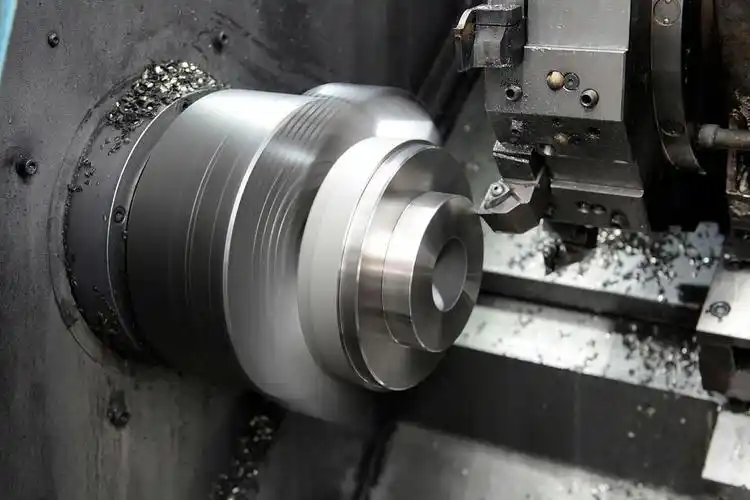
In the world of metal stamping, a sophisticated interplay between materials and processes unfolds. As sheet metal is reborn under the relentless hammering of the press, a refined metal stamping part is born. Behind this lies the ingenuity of materials scientists and process engineers, who skillfully balance multiple considerations such as service life, appearance quality, and cost-effectiveness, ensuring that each stamped part meets functional requirements while also showcasing exceptional aesthetic value.
1. Four Considerations for Material Selection
In the field of metal stamping, material selection is undoubtedly a crucial element. Faced with the complex world of metallic materials, accurately grasping the characteristics of each material to make the most suitable choice for the stamped part has become a shared challenge for materials scientists and process engineers. They must comprehensively consider factors such as the material's strength, ductility, corrosion resistance, and cost to ensure that the selected material meets the functional requirements of the stamped part while also possessing excellent durability and economy. This process is undoubtedly a game of precise control and balance of material properties in four dimensions.
In the selection of materials for stamped parts, we face considerations of four dimensions: mechanical properties, formability, corrosion resistance, and economy. These dimensions intertwine, forming a complex universe of material selection. Once, a well-known automotive parts manufacturer made a mistake in material selection, resulting in mass cracking of door hinges. Later, they switched to DP780 duplex steel, a high-strength steel that not only increased yield strength by 40%, but also shifted its formability limit curve to the right by 15%. Furthermore, its strain hardening index n reached 0.22, perfectly balancing the dual requirements of stamping formability and structural strength.
Elongation is an indispensable indicator when selecting materials. It acts like an invisible referee in material selection, silently influencing the quality of stamped parts. For example, when selecting materials for smartwatch casings, designers valued the 20% elongation after fracture of 6-series aluminum alloys to ensure uniform material flow during deep drawing and prevent cracking at the earpiece. Similarly, medical surgical forceps are made of 17-4PH stainless steel because, after solution treatment and aging, they maintain an elongation of 15% while achieving an ultra-high strength of up to 1300 MPa.
2. Precise Control of Process Parameters
In the stamping process, setting process parameters is like a skillful dancer meticulously choreographing each "dance" on a complex stage. These parameters not only affect the quality of the stamped parts but also influence production efficiency and cost.
Take die temperature as an example; it's like the rhythm of a dance, controlling the flow and forming of the metal material. Excessively high or low temperatures can lead to defects in the stamped parts, such as cracking or springback. The press stroke, speed, and lubrication conditions together constitute the melody of this "dance," working together to shape the ideal stamped part.
Furthermore, every step in the stamping process, like every movement in a dance, requires precision. From material pretreatment to forming process control, and then to post-processing and inspection, every step embodies the pursuit of quality and the desire for perfection. In stamping processes, the setting of the die clearance is crucial, acting as the golden ratio in this technological "dance." Taking the stamping of 0.8mm thick 304 stainless steel tableware as an example, while empirical formulas suggest a single-sided clearance of 8%-12% of the material thickness, in practice, this clearance value is dynamically adjusted based on the material's hardness. One kitchenware factory, by fine-tuning the clearance value from 0.07mm to 0.09mm, not only reduced the stamping force by 18% but also significantly extended the die's lifespan.
On the other hand, springback control is a major challenge in bending processes. When bending 1.5mm thick HC420LA high-strength steel at an 88-degree angle, engineers used an overbending method, pre-setting a 3-degree overbending amount to compensate for springback. Finite element simulation revealed that when the coefficient of friction increased from 0.1 to 0.15, the springback angle significantly decreased from 2.8° to 1.2°, explaining why new nano-coated dies can significantly improve dimensional accuracy. The Technological Allure of Mold Surfaces
3. Mold Surface Treatment Technology
In stamping and bending processes, mold surface treatment technology plays a crucial role. It's like "cosmetics" for the mold, significantly improving its performance and lifespan. For example, the application of new nano-coatings not only enhances the mold's wear resistance but also effectively reduces springback, thus greatly improving the product's dimensional accuracy. Molds with this technological makeover are undoubtedly a highlight in stamping and bending processes.
In the surface treatment of automotive fuel tank caps, trivalent chromium passivation is gradually replacing the traditional hexavalent chromium process. According to tests conducted by Japanese automakers, the new passivation film, though only 0.5μm thin, can withstand salt spray corrosion for over 1200 hours, while significantly reducing wastewater treatment costs. In the consumer electronics field, precisely controlling the thickness of the anodic oxide film within the 10-15μm range ensures the wear resistance of the phone casing while effectively avoiding the brittleness risk caused by excessively thick films.
Furthermore, PVD coating technology has brought revolutionary changes to the surface treatment of hardware components. Taking a luxury brand lighter as an example, after adopting a multi-layer TiCN coating, its hardness reaches HV2800, and its wear resistance exceeds 200,000 cycles. This physical vapor deposition process, performed in a vacuum environment at 450℃, allows metal ions to adhere to the substrate surface as lightly as a ballerina, thus giving the product excellent wear resistance and aesthetics.
4. Process Innovation Reduces Overall Costs
In many fields such as automobiles, consumer electronics, and hardware components, surface treatment technology is not only related to the aesthetic appearance of products but also plays a crucial role in cost control. Through continuous innovation and optimization, new passivation films and coating technologies have significantly improved product performance while significantly reducing production costs. This silent battle for cost control is quietly unfolding across various industries.
In the bathroom hardware sector, through a material substitution strategy, a company successfully transformed a 3mm thick copper faucet into a 0.8mm stainless steel sheet stamping and welding structure, thereby reducing material costs by 65%. Meanwhile, they also utilized laser welding technology to ensure the product's sealing performance remained unaffected. Similarly, the automotive industry uses tailor-welded blanks, pre-welding sheets of different thicknesses and materials together, which not only reduced the weight of the door inner panels by 15% but also ensured safety during collisions.
Furthermore, die life economics is driving process innovation. An air conditioning panel manufacturer found that while using powder metallurgy die steel increased the cost of a single die by 30%, its lifespan significantly increased from 500,000 strokes to 2 million strokes, resulting in a 42% reduction in overall costs. This life-cycle cost analysis method is gradually becoming a new standard for corporate procurement decisions.
Driven by smart manufacturing, stamping processes are gradually undergoing digital upgrades. A stamping plant, by introducing an AI parameter optimization system, significantly reduced the number of trial runs from an average of 8 to only 2, while simultaneously increasing material utilization to 92%. In addition, the integration of blockchain technology provides each stamped part with a traceable record back to the furnace number, ensuring the high-quality standards required in the aerospace industry. The combination of 5G base station heat sinks and gradient material stamping technology, as well as the application of biodegradable magnesium alloys in temporary medical implants, signify that the metal stamping industry is continuously breaking through traditional limitations. These technological innovations, unfolding between microscopic grain boundaries and macroscopic deformation, will profoundly change the familiar metal industry we know.
Search
Categories List
Need More Details?
Contact me for details on creating and managing design projects, project features, and services and prices
Send Message
Please fill the form correctly to send us your requirement. We respond to all enquiries within 4 business hours.