
NEWS
Professional attitude and strict quality control
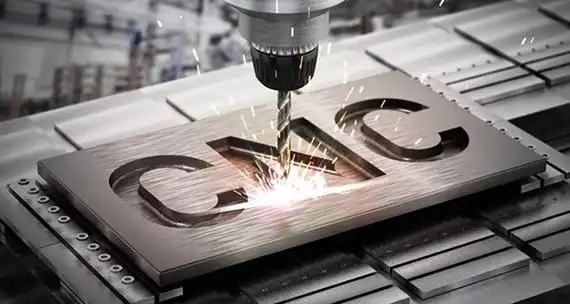
CNC machining is an important automated machining technology in modern manufacturing. By controlling the movement of machine tools through computer programs, CNC machining can achieve high precision, high efficiency, and machining of complex-shaped parts. This article will provide a detailed introduction to the basic concepts, working principles, main advantages, and practical applications of CNC machining.
1. Basic Concepts of CNC Machining
CNC machining is a technology that uses a digital control system to automatically control machine tools. Through pre-written numerical control programs (such as G-code and M-code), parameters such as toolpath, cutting speed, and feed rate are controlled to achieve precision machining of materials such as metals, plastics, and wood. CNC machine tools include various types such as CNC milling machines, CNC lathes, and CNC grinding machines, capable of performing various machining tasks such as cutting, drilling, milling, and grinding.
2. Working Principle of CNC Machining
The working principle of CNC machining can be summarized in the following steps:
a. Design and Programming
First, engineers use computer-aided design (CAD) software to create a three-dimensional model of the workpiece. Then, computer-aided manufacturing (CAM) software converts the design model into NC code (such as G-code), which contains detailed information such as machining paths and cutting parameters.
b. Data Transmission
The written NC program is transmitted to the CNC machine tool's control system via a data transmission interface (such as USB or Ethernet). The control system reads and interprets this code, generates control signals, and drives the various moving parts of the machine tool.
c. Machining Execution
The CNC machine tool automatically plans and executes toolpaths according to the NC program instructions. The machine tool's moving parts (such as the spindle and worktable) move along predetermined trajectories under the control of the NC system, completing operations such as cutting, drilling, and milling on the workpiece.
d. Inspection and Adjustment
During machining, the CNC system monitors parameters such as the position of the tool and workpiece, and cutting forces in real time, making adjustments as necessary to ensure machining accuracy and quality. Some advanced CNC machine tools are also equipped with online measurement and feedback systems, allowing for real-time inspection and correction during machining.
3. Key Advantages of CNC Machining
Compared to traditional manual machining, CNC machining offers the following significant advantages:
a. High Precision and Consistency
CNC machining achieves micron-level precision, ensuring consistency across every workpiece. This is particularly important for products requiring high precision and consistency, such as aerospace components and medical devices.
b. High Efficiency and Automation
CNC machining can operate continuously and automatically, significantly improving production efficiency. Especially in mass production, CNC machine tools can complete machining tasks unattended, reducing human intervention.
c. Machining Complex Shapes
CNC machining easily handles the machining of complex curved surfaces and irregularly shaped structures, complex processes that are difficult to achieve with traditional manual machining. CNC machine tools can perform multi-axis simultaneous machining, enabling the machining of any complex shape in three-dimensional space.
d. Flexible Production
CNC machining offers high flexibility, allowing for rapid adjustment of machining parameters and programs to adapt to different batch sizes and diverse product requirements. This makes CNC machining particularly suitable for the multi-variety, small-batch production model of modern manufacturing.
4. Practical Applications of CNC Machining
CNC machining has wide applications across various industries. Here are some typical examples:
a. Aerospace
The aerospace field demands extremely high precision and complexity in parts. CNC machining, through multi-axis linkage technology, can process complex curved surfaces and high-precision holes, meeting the stringent requirements of aerospace components.
b. Automotive Manufacturing
CNC machining is used in automotive manufacturing to process engine parts, body structural components, and molds. Through CNC machining, efficient mass production can be achieved, ensuring the quality and consistency of each part.
c. Medical Devices
Medical devices have extremely high requirements for precision and surface finish. CNC machining can precisely machine complex medical device parts, such as artificial joints, surgical instruments, and implants, ensuring high product quality and reliability.
d. Mold Manufacturing
CNC machining plays a crucial role in mold manufacturing. Mold manufacturing requires high precision and complex surface shapes. CNC machine tools, through precision machining, ensure high-quality molds, thereby improving product quality and production efficiency.
5. Development Trends of CNC Machining
With continuous technological advancements, CNC machining is evolving towards intelligence, networking, and flexibility. Future CNC machining will increasingly utilize artificial intelligence (AI) and the Internet of Things (IoT) technologies to achieve adaptive machining, autonomous decision-making, and remote monitoring, further improving machining efficiency and quality.
a. Intelligence
By introducing AI technology, CNC machining can achieve automatic programming, real-time monitoring, and fault diagnosis, further enhancing the level of intelligence in machining.
b. Networking
Through the Industrial Internet, CNC machine tools can achieve remote monitoring and collaborative work, improving production efficiency and management levels.
c. Flexibility
Future CNC machining will place greater emphasis on flexible production to adapt to market demands for multi-variety, small-batch production.
As a crucial component of modern manufacturing technology, CNC machining has been widely applied across various industries due to its high precision, high efficiency, and flexibility. With continuous technological advancements, CNC machining will continue to develop, driving the manufacturing industry towards greater intelligence, automation, and efficiency. Understanding and mastering CNC machining technology can not only enhance a company's competitiveness but also promote the overall progress of the manufacturing industry.
Search
Categories List
Need More Details?
Contact me for details on creating and managing design projects, project features, and services and prices
Send Message
Please fill the form correctly to send us your requirement. We respond to all enquiries within 4 business hours.