
NEWS
Professional attitude and strict quality control
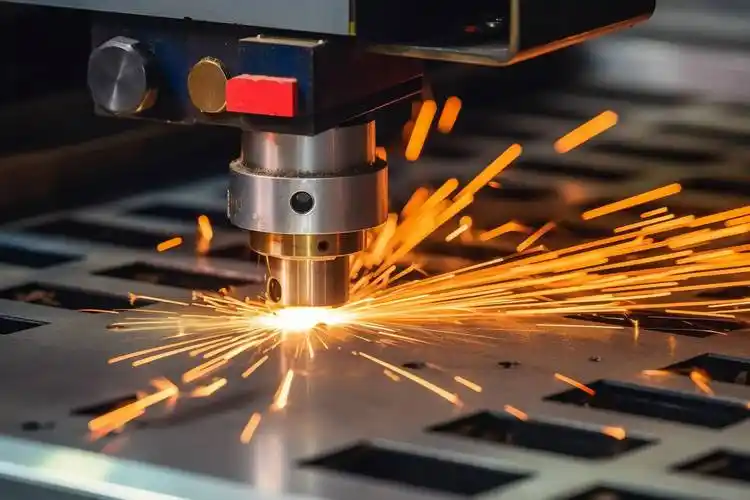
CNC metalworking is a technology that uses computer-controlled automated machine tools to cut and shape metal materials. This technology is widely used in machinery manufacturing, automotive parts, aerospace components, and other fields. The following will explain its basic principles, processing flow, equipment types, and process characteristics.
1. Basic Principles of CNC Metalworking
The core of CNC metalworking lies in digital control technology. Operators write machining programs based on part drawings, converting tool paths, cutting parameters, and other information into specific codes. The control system reads the codes and drives servo motors to control the machine tool's motion axes, causing relative movement between the tool and the workpiece. Precise machining of metal materials is achieved through cutting, drilling, milling, and other methods. The entire process requires no direct manual operation; the computer monitors the position and motion status of each axis in real time.
2. Typical Machining Flow
(1) Drawing Analysis: Technicians first analyze the part drawings to determine key parameters such as machining requirements, dimensional tolerances, and surface roughness.
(2) Process Planning: The machining sequence is determined based on the part characteristics, and appropriate tools, fixtures, and cutting parameters are selected. The principle of process concentration needs to be considered to reduce the number of clamping operations.
(3) Programming: Use specialized software to generate toolpaths and convert them into G-code recognizable by the machine tool. The program must include instructions for tool compensation, cutting speed, etc.
(4) Equipment Preparation: Install and calibrate the fixture, clamp the blank material, install the required tools, and measure the tool offset value.
(5) Trial Cut Verification: First, perform a no-load run to check the correctness of the program, then use test materials for actual cutting tests and measure the machining dimensions.
(6) Batch Production: After confirming that the program is correct, start automated machining. During the process, periodically check the workpiece quality and replace worn tools in a timely manner.
3. Common Machining Equipment Types
(1) CNC Milling Machine: Cuts a fixed workpiece by rotating the tool. Suitable for machining features such as planes, curved surfaces, and grooves. Based on structure, it can be divided into vertical, horizontal, and gantry types.
(2) CNC Lathe: The workpiece rotates while the tool moves. Mainly used for machining rotating parts. Can complete processes such as external diameter machining, internal hole machining, and thread machining.
(3) Machining Centers: Equipped with automatic tool changers and tool magazines, allowing for multi-process machining in a single setup. Common types include vertical machining centers, horizontal machining centers, and five-axis machining centers.
(4) Special Machining Equipment: Includes CNC EDM machines, wire EDM machines, etc., used for processing high-hardness materials or complex cavities.
4. Technological Characteristics
(1) Machining Accuracy: Conventional machining accuracy can reach 0.01 mm, and high-precision equipment can achieve micron-level machining. Repeatability is stable, suitable for mass production.
(2) Adaptability: Product types can be quickly converted by modifying the program, making it particularly suitable for multi-variety, small-batch production.
(3) Automation: Equipment equipped with automatic tool changers and online measurement systems can achieve long-term continuous operation.
(4) Material Utilization: Material utilization can be effectively improved by optimizing tool paths and layered cutting.
(5) Machining Range: Can handle various metal materials such as steel, aluminum, copper, and titanium, including difficult-to-machine materials such as high-temperature alloys.
5. Key Process Parameters
(1) Cutting Speed: Determined based on tool and workpiece materials, directly affecting machining efficiency and tool life.
(2) Feed Rate: Related to surface finish and cutting force; must be selected appropriately based on machine tool rigidity.
(3) Depth of Cut: A larger value is used for roughing, and a smaller value for finishing; tool load-bearing capacity must be considered.
(4) Cooling Method: Includes dry cutting, wet cutting, and micro-lubrication; select an appropriate cooling scheme based on machining requirements.
6. Quality Control Points
(1) Equipment Maintenance: Regularly check machine tool geometry accuracy and maintain key components such as guideways and lead screws.
(2) Tool Management: Establish a tool life monitoring system and replace worn tools promptly.
(3) Process Inspection: Use calipers, micrometers, and other measuring tools for first-piece inspection and sampling inspection; important dimensions are inspected using a coordinate measuring machine.
(4) Environmental Control: Maintain stable workshop temperature to reduce the impact of thermal deformation on machining accuracy.
7. Cost Structure Analysis
(1) Equipment Investment: CNC machine tool prices range from hundreds of thousands to millions of RMB, depending on equipment specifications and configuration.
(2) Tool Consumption: Carbide tools cost tens to hundreds of RMB each, while high-end tools such as ceramic and cubic boron nitride are even more expensive.
(3) Energy Consumption: Primarily from the electrical energy consumption of the spindle motor and servo system.
(4) Labor Costs: Includes the salaries of programmers, operators, and quality inspectors.
(5) Material Costs: Metal raw material prices fluctuate with the market; aluminum alloy materials cost approximately tens of thousands of RMB per ton, while stainless steel materials are even more expensive.
8. Technological Development Trends
(1) Intelligentization: Technologies such as adaptive control of the machining process and real-time monitoring of tool status are gradually becoming widespread.
(2) Composite Manufacturing: Processes such as mill-turning composite manufacturing and the combination of additive and subtractive manufacturing are constantly developing.
(3) Greening: The application scope of environmentally friendly technologies such as dry cutting and micro-lubrication is expanding.
(4) Integration: Forming flexible manufacturing units with industrial robots and automated logistics systems.
In practical applications, appropriate equipment and process solutions need to be selected based on specific production needs. For simple parts, economical CNC equipment can be selected; for complex and precision parts, multi-axis machining centers need to be considered. At the same time, attention should be paid to the skills training of operators, and a sound process document management and strict quality control system are important links to ensure product quality. With the advancement of manufacturing technology, CNC metal processing is developing towards higher precision and higher efficiency.
Search
Categories List
Need More Details?
Contact me for details on creating and managing design projects, project features, and services and prices
Send Message
Please fill the form correctly to send us your requirement. We respond to all enquiries within 4 business hours.